Bring your houseplants indoors as soon as nighttime temperatures drop below 10–12°C, generally between mid-September and early October depending on your region of France. Beyond that threshold, the risk of thermal shock and leaf drop rises sharply, particularly for tropical species such as ficus, monstera or pothos.
The right benchmark is therefore not a date on the calendar, but the nighttime temperature — and it varies noticeably from one region to another. Here is how to know exactly when to act, in what order to bring your plants in, and how to keep the transition from proving fatal to them.
At what temperature should you bring houseplants indoors?
The general rule followed by garden centers and botanical gardens: as soon as nighttime temperatures regularly approach 10–12°C, it is time to bring in cold-sensitive plants. That covers the vast majority of classic houseplants that are put outside to enjoy the open air in summer.
A few hardier species can wait a little longer, down to about 5°C at night: Christmas cactus, succulents, citrus, tropical azaleas and cyclamens. For citrus in particular, it is better to aim for a cool room (8–12°C) rather than going straight to the heated living room.
The calendar by region in France
The 10–12°C threshold does not arrive on the same date everywhere. Here are the benchmarks generally observed:
- North and East — from mid-September, below 12°C at night
- Center and Île-de-France — late September to early October, below 10°C
- South-West and Atlantic coast — early to mid-October, below 8°C
- Mediterranean coast — mid-October to November, below 5°C
It is better to plan ahead than to wait until late autumn: starting in September leaves time for a gentle acclimation, without a last-minute rush at the first announced cold snap.
Which plants should you bring in first?
Not all plants are equal in the face of cold. Here is the order in which to act:
- Urgently, as soon as 5°C is forecast: banana plant, alocasia, caladium, strelitzia, tropical hibiscus, tuberous begonia — these tropical plants cannot tolerate any frost.
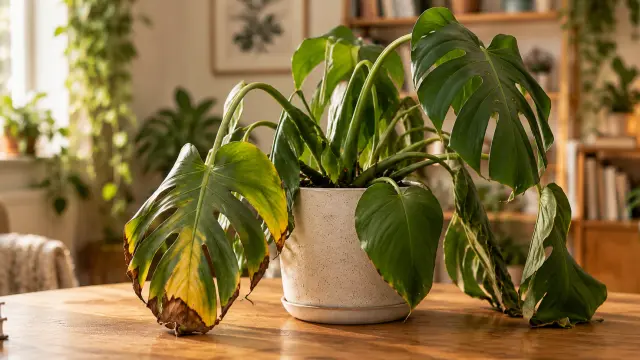
- Before the end of September: ficus, rubber plant, pothos, indoor palm, and the monstera if you put it outside for the summer — a sudden change of environment is precisely one of the common causes of leaf drop in this plant.
- Can wait a little: Christmas cactus, succulents, citrus, tropical azaleas, cyclamens (down to about 5°C).
How do you acclimate your plants without thermal shock?
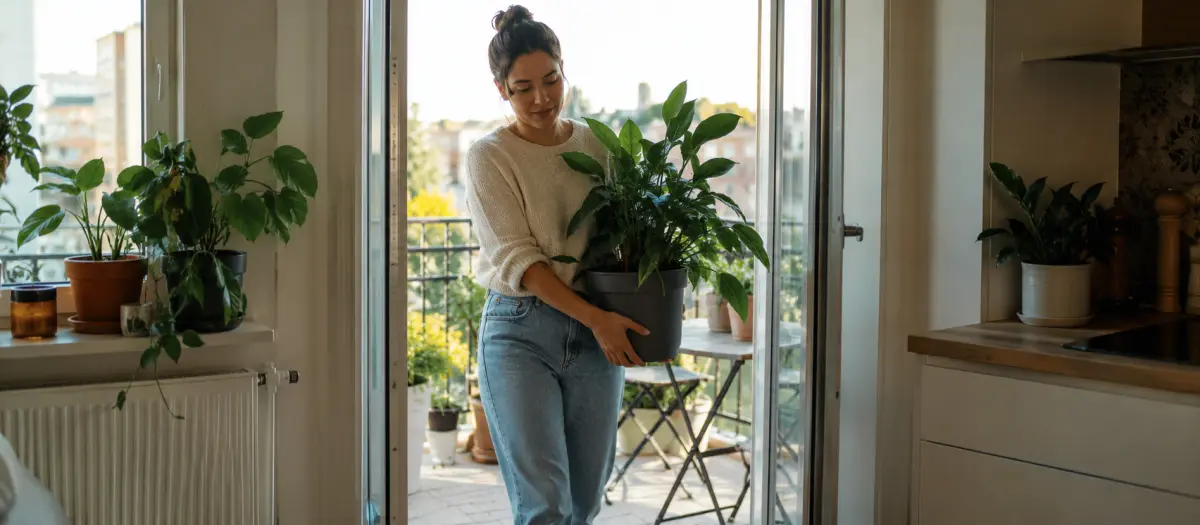
Bringing a plant in all at once, after several months outdoors, is often harsher on it than the cold itself. The recommended method: a gradual transition over 7 to 10 days, bringing it in at night and putting it back outside during the day as long as daytime temperatures allow.
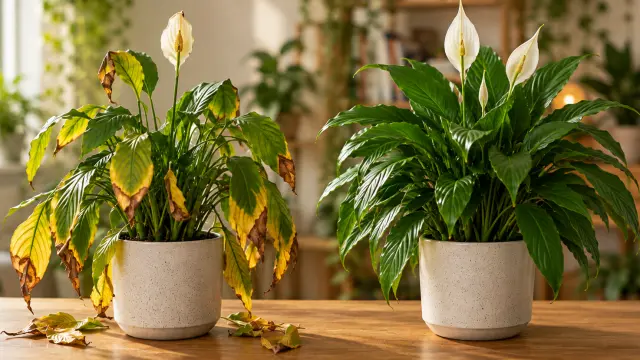
The aim is to limit the abrupt gap between outdoor air and indoor air, which is often heated. Without this step, some species lose part of their foliage when moving indoors — a stress very similar to the one caused by moving house or simply changing rooms.
Check for pests and treat them before bringing plants in
A plant that has spent the summer outdoors may have picked up unwanted guests without it showing yet. Before bringing it in:
- rinse the foliage with lukewarm water to dislodge any insects
- spray insecticidal soap on the tops and undersides of the leaves
- inspect the stems and the undersides of the leaves for mealybugs or spider mites
- if possible, keep the plant apart from your other plants for 7 to 10 days before reintroducing it
It is precisely indoors, in a more enclosed and heated atmosphere, that these pests multiply fastest in autumn and winter. Our article on how to recognize an unhealthy houseplant details the signs that should raise the alarm in the weeks after you bring your plants in.
Where should you place your plants once they are indoors?
Set them in a bright spot, protecting them from direct sun behind the glass during the hottest hours (a light curtain or moving them back a few dozen centimeters is enough). Dust-free foliage also absorbs the available light better, which is scarcer than outdoors.
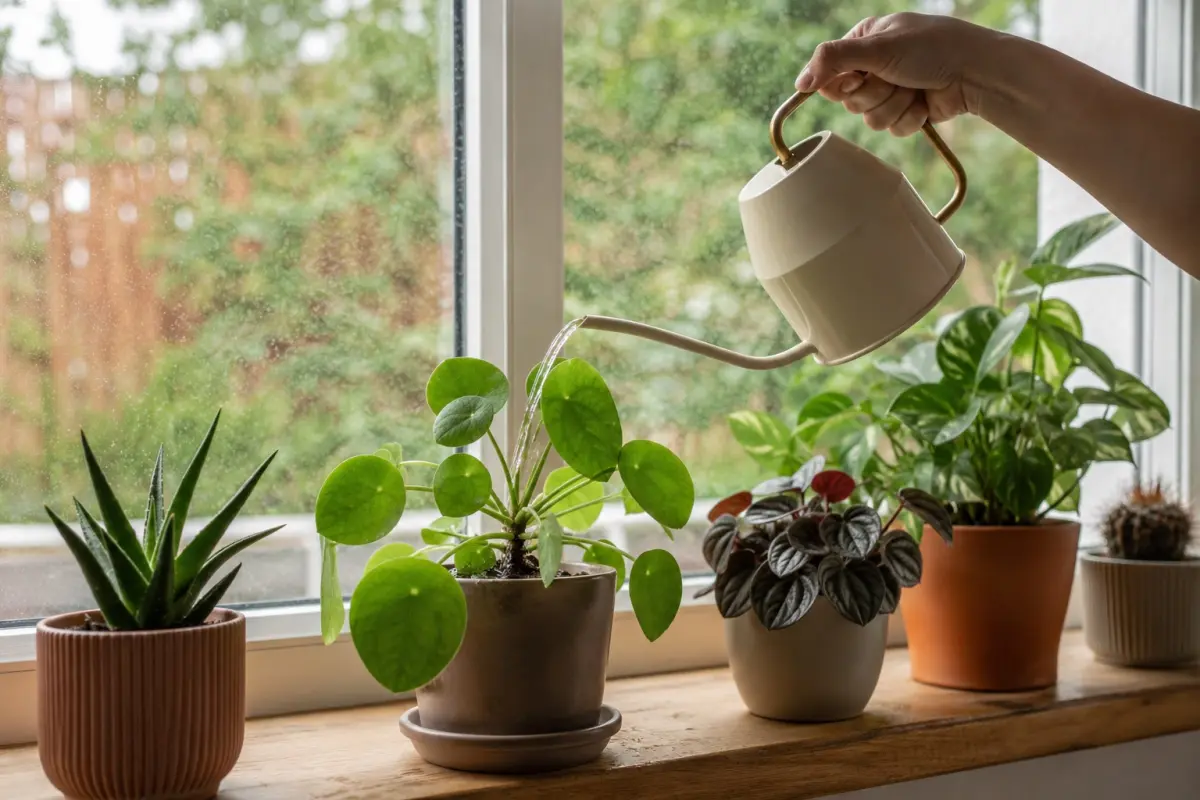
Gradually reduce how often you water: air circulates differently indoors, and a plant that has just spent the summer outdoors no longer has the same needs. Check the potting soil before each watering rather than keeping the summer rhythm — that is the whole subject of our article on the ideal watering frequency.
💡 The Arroseo app automatically adjusts the frequency of your watering reminders as soon as your plants are back indoors — so you don't keep watering them as if it were midsummer.
Frequently asked questions
At what temperature should you bring houseplants indoors?
As soon as nighttime temperatures regularly fall below 10–12°C for the majority of houseplants. A few hardier species (Christmas cactus, succulents, citrus, tropical azaleas, cyclamens) can wait until about 5°C.
What is the right time to bring plants in depending on your region?
Mid-September in the North and East, late September to early October in the Center and Île-de-France, early to mid-October in the South-West, and mid-October to November along the Mediterranean coast — depending on when nights reach the critical threshold locally.
How do you get a plant used to its new environment without stressing it?
By bringing it in at night and putting it back outside during the day for 7 to 10 days, giving it time to gradually get used to indoor air, which is drier and often heated, before staying there for good.
Should you treat your plants before bringing them indoors?
Yes: a lukewarm-water rinse, a spray of insecticidal soap on the tops and undersides of the leaves and, if possible, a short 7-to-10-day quarantine help avoid introducing mealybugs or spider mites among your other plants.
Don't miss the right moment to bring your plants in
Arroseo alerts you at the right time and automatically adjusts each plant's watering frequency once it is back indoors.
Download the app