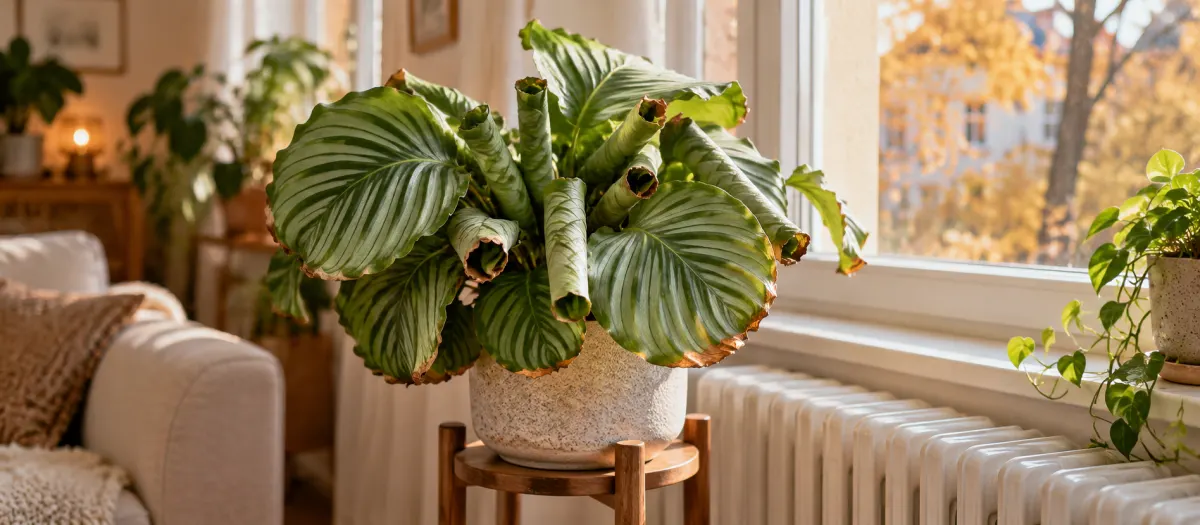
A calathea whose leaves curl during the day is most often short of humidity: as soon as the heat comes back on, dry air makes its leaves roll up and their edges turn brown. Yellowing leaves point instead to soil that's too wet, especially in winter, when the plant grows less.
Before you worry, check the time. In the evening, a calathea raises its leaves and folds them upward, then opens them again in the morning: this movement, called nyctinasty, is normal.
Curled, yellow or dry: what are its leaves telling you?
Look at the shape and color of the leaves, then feel the soil.
| What you see | Most likely cause | First step |
|---|---|---|
| Leaves folded upward in the evening, open again in the morning | the plant's normal movement | do nothing |
| Leaves rolled up during the day | air that's too dry, sometimes with light that's too strong | move it away from the heater and raise the humidity around it |
| Brown, dry leaf tips and edges | dry air, or tap water | raise the humidity and water it with rainwater or filtered water |
| Leaves turning yellow, wet soil | overwatering, which rots the roots | let the surface of the soil dry before watering |
| Drooping leaves, soil dry deep down | underwatering | water thoroughly, then empty the cachepot |
| Water-soaked patches on the leaves, in winter | edema: the soil is too wet for the season | water less often |
| Colors fading, weak growth | lack of light | move it closer to a window |
| Leaves speckled with yellow, fine webbing underneath | spider mites | isolate it from your other plants |
💡 To keep your calathea in shape this winter, you need Arroseo. It wants soil that's just moist, neither soggy nor dry: the free app reminds you to water it on the schedule you set for it, spaced further apart in winter, counted from your last watering. Add your calathea to Arroseo
Why are my calathea leaves curling?
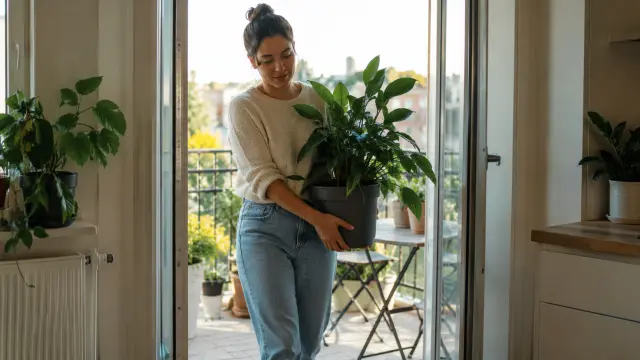
Calatheas come from the understory of tropical forests in the Americas, where the air is warm and humid. In a heated home, the air becomes too dry for them: the leaves roll up and their edges turn brown, all the faster if the plant gets bright light. Start by moving it away from heaters and drafts, then raise the humidity around it:
- set the pot on a tray filled with gravel or clay pebbles, with water just below their surface
- group it with other plants, which share the moisture they give off
- put it in a bright bathroom or kitchen, the most humid rooms in the house
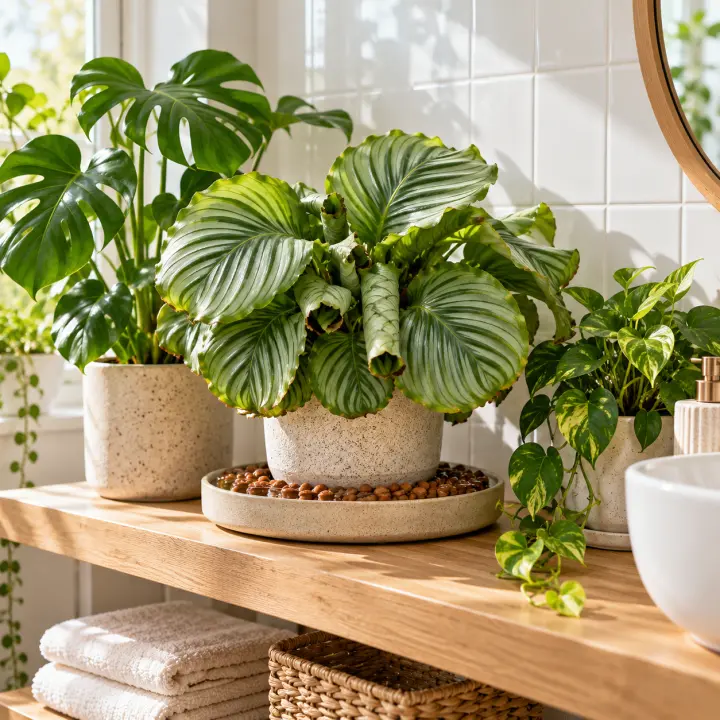
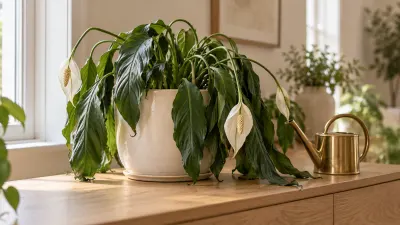
Check the soil too: a calathea should never dry out completely. Soil that's dry deep down makes its leaves droop and turn brown.
Why are my calathea leaves drying out and turning brown?
Brown, dry tips and edges most often come from dry air, just like curled leaves. Tap water can also be the cause: calatheas don't handle the fluoride and chlorine it contains well. Water yours with rainwater or filtered water. Tap water left to stand for 24 hours loses its chlorine but keeps its fluoride.
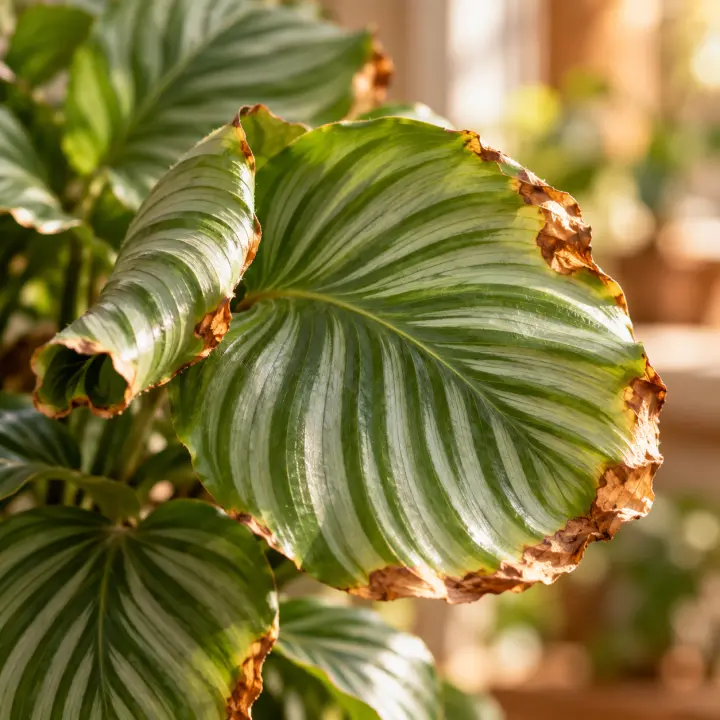
In direct sun, its leaves burn: give it bright light, never direct sun. Cut off leaves that have turned entirely brown, and dead stems at soil level.
Why is my calathea turning yellow?
A yellowing calathea is often getting too much water, especially in fall and winter, when it grows less. In soggy soil, or when water sits at the bottom of the cachepot, its roots rot. In winter, soil that's too wet also causes edema: the plant can no longer release water through its leaves, where water-soaked patches appear.
Cold also turns its leaves yellow: calatheas dislike drafts and swings in temperature. Keep yours between 61 and 70 °F (16 and 21 °C), away from open windows and heaters.
Leaves speckled with yellow, dull or silvery, with fine webbing underneath, give away spider mites. Isolate the plant from your other plants and learn to recognize an unhealthy plant to rule out other pests.
How should you water a calathea, especially in winter?
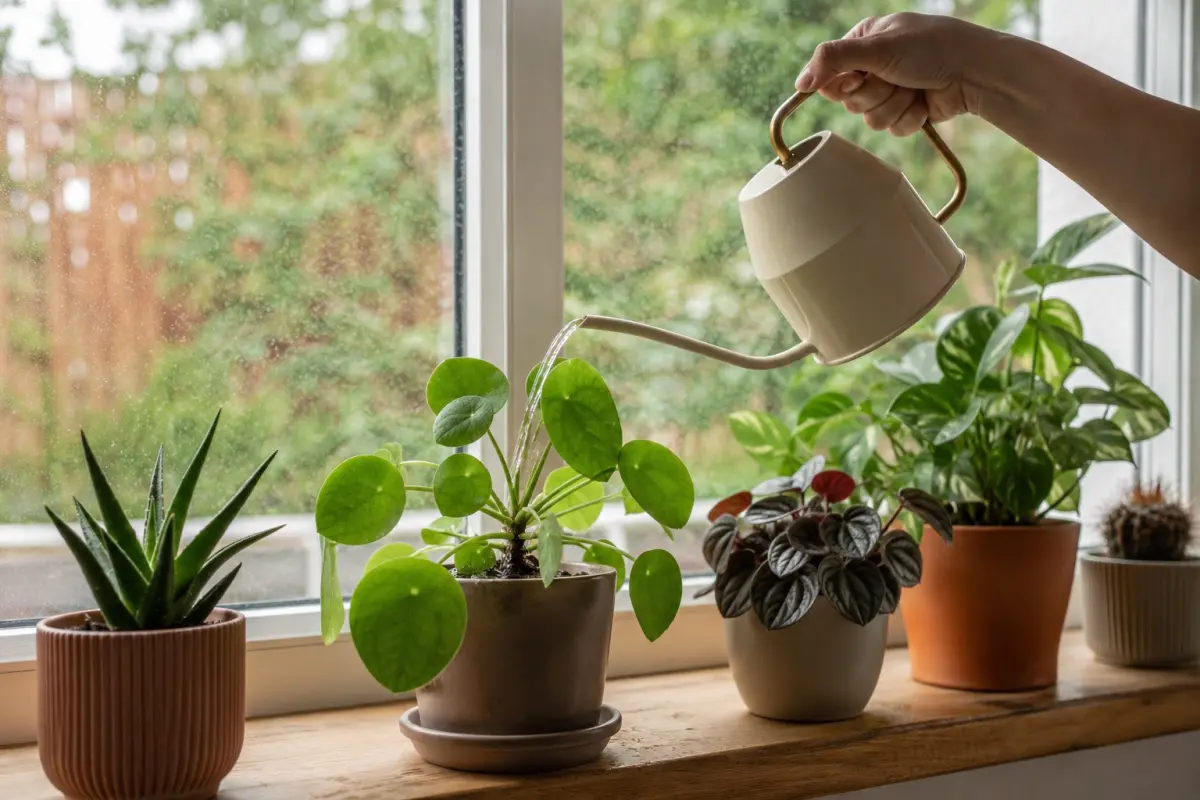
From spring to the end of summer, keep the soil lightly moist at all times. In fall and winter, let the surface of the soil dry before watering again, without ever letting it dry out completely. Water thoroughly, then empty any water left in the saucer or cachepot. Don't fertilize it from October to March.
No fixed schedule works: it depends on how warm the room is, the light and the size of the pot. Feel the soil before every watering to find the right watering frequency for your calathea.
Where should you put a calathea?
Give it bright light, but never direct sun: near a north- or east-facing window in summer. In winter, when light levels drop, a south-facing window suits it better. Too far from a window, it grows poorly and its colors fade.
Calatheas are not toxic to cats or dogs.
Frequently asked questions
Why does my calathea close up at night?
That's normal: in the evening, it raises its leaves and folds them upward, then opens them again in the morning. This movement is called nyctinasty.
How can I tell if my calathea is thirsty?
Feel the soil. From spring to the end of summer, water as soon as its surface starts to dry. In winter, wait until the surface is dry, without ever letting all the soil dry out. Drooping leaves in soil that's dry deep down signal underwatering.
What are the signs of an overwatered calathea?
Leaves turning yellow in wet soil and, in winter, water-soaked patches on the leaves. Let the surface of the soil dry before watering again, and empty the cachepot.
Should I cut off dry calathea leaves?
Yes, cut off leaves that have turned entirely brown. Cutting doesn't fix the cause: raise the humidity and water it with rainwater or filtered water.
Is calathea toxic to cats?
No, calathea is not toxic to cats or dogs.
A calathea watered on the right schedule, even in winter
Arroseo reminds you to water your calathea at the interval you chose, counted from your last watering, and keeps a history of its care. Leaves yellowing or browning for no obvious reason? Arroseo+'s health diagnosis points you to the likely cause.
Download the app