There is no universal schedule: water a houseplant when the top 1 to 2 inches of soil are dry, not on a fixed day. Depending on the species, the season and the room, that can mean every 3 days in summer or every 2 weeks in winter. Cacti and succulents need far less.
The right habit comes down to one gesture: push a finger into the soil before every watering. If it's still damp, wait, even if you last watered a week ago.
Why there is no single rule
How fast the soil dries out depends in particular on:
- the species
- the temperature
- the light
- the type of pot
- the humidity of the room
Soil in a small terracotta pot, in a warm, sunny spot, dries out much faster than soil in a large plastic pot in a cool, shady one: porous terracotta lets water evaporate through its walls. A plant in active growth also drinks more than a resting one.
The change of season matters just as much: a plant that has just come back indoors after the summer no longer has the same water needs at all, even though the reflex is often to keep the watering rhythm of the warm season. In winter, most plants grow less and need watering less often.
💡 Arroseo replaces the fixed calendar with a rhythm tailored to each plant. Scanning a plant suggests a watering frequency based on its species, which you then adjust to the season, the light and the pot; the free app sends you a reminder when watering is due. Add your plants to Arroseo
How do you know when to water?
Check the soil before looking at the leaves: they only react once the problem has set in.
- push a finger into the soil: if it's dry 1 to 2 inches down, water
- lift the pot: when the soil is dry, it's noticeably lighter than after watering
- look at the soil: it turns paler as it dries
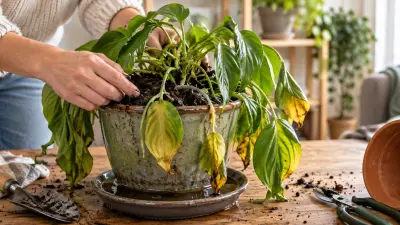
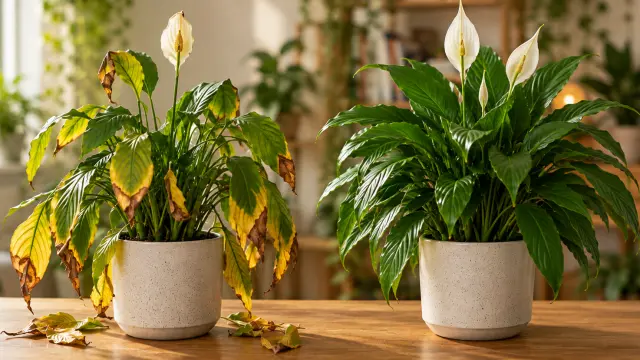
- watch the leaves: a thirsty plant wilts and turns grayish green, an overwatered plant turns yellow or drops leaves
- note the date of each watering: you'll quickly see each plant's own rhythm
How often should you water each type of plant?
The 1-to-2-inch rule works for most foliage plants. Three groups are exceptions.
| Plant | Spring and summer | Fall and winter |
|---|---|---|
| Tropical foliage plants (monstera, ficus, pothos) | when the top 1 to 2 inches of soil are dry | same rule: the soil dries more slowly, so waterings are further apart |
| Calathea | often, to keep the soil slightly moist | when the surface has dried, without ever letting all the soil dry out |
| Snake plant (sansevieria) | only once the soil has dried out | barely any water, unless the room is very warm |
| Cacti and succulents | thoroughly, when the surface of the soil is dry to the touch | barely any water: just enough to keep them from shriveling |
How do you water a houseplant properly?
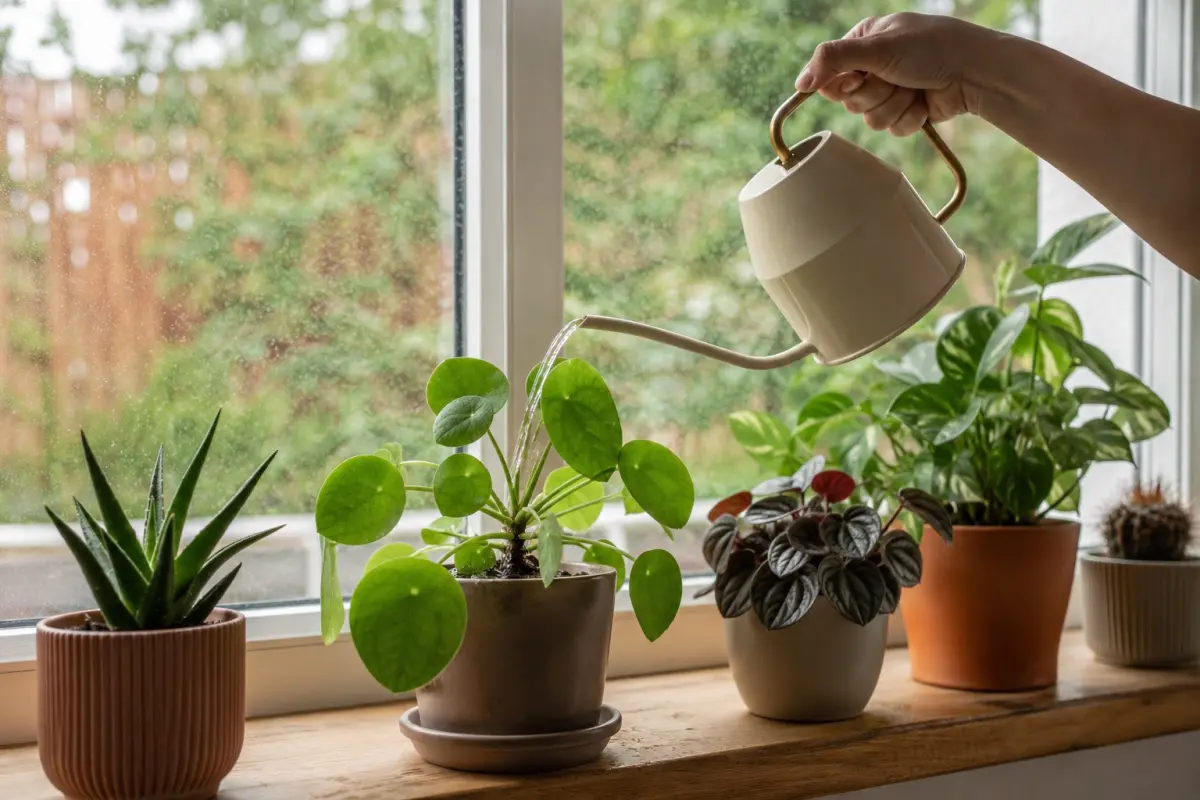
Water thoroughly, until water runs out of the drainage holes: all of the soil, where the roots are, gets moistened, and the water flushes out excess mineral salts. Let it drain for 10 to 20 minutes, then empty the saucer or cachepot: a plant should never sit in water.
You can also water from the bottom: set the pot in a saucer filled with water, let the soil soak it up, then pour off what's left. Either way, choose a pot with drainage holes: without them, water pools at the bottom and rots the roots.
The most common mistakes
Watering on a fixed schedule
Many people water “every Sunday.” Yet a plant's needs change constantly.
Watering without checking the soil
Before watering, always check whether the soil is still damp deep down.
Watering a little every day
A splash of water every day only wets the surface: the roots at the bottom stay dry, while the top of the soil never dries out. Water thoroughly, then wait for the soil to dry.
Giving too much water
Overwatering often causes:
- yellow leaves
- rotten roots
- fungus gnats
- the death of the plant
If you recognize these signs, our article explains how to save an overwatered plant.
The easiest plants to start with
If you're just starting out, some plants are more forgiving:
- pothos
- snake plant (sansevieria)
- ZZ plant (zamioculcas)
- monstera
They tolerate watering mistakes better and are ideal for learning. You'll find more in our selection of unkillable houseplants for beginners.
Frequently asked questions
How often should you water a foliage houseplant?
When the top 1 to 2 inches of soil are dry. Depending on the season and the room, that ranges from every 3 days in summer to every 2 weeks in winter.
Should you water houseplants every day when it's hot?
Rarely. Heat and sun dry the soil faster, especially in a small terracotta pot: check it more often, but only water if it's dry to the touch.
Which plants only need water once a month?
No plant has a fixed date, but cacti, succulents and snake plants get very little water in winter: just enough to keep them from shriveling. The rest of the year, water them once their soil has dried out.
How do I know if my plant needs water?
Push a finger into the soil: if it's dry 1 to 2 inches down, water. A pot that feels lighter than usual and paler soil confirm it has dried out.
How much water does a houseplant need?
Enough for water to run out of the pot's drainage holes. Let it drain, then empty the saucer: it's not the amount of water that drowns a plant, but soil that never dries out.
Stop letting your plants die from bad watering
Arroseo remembers the watering frequency of each of your plants, which you adjust to the season, and sends you a reminder on the day watering is due. Watering reminders are free.
Download the app