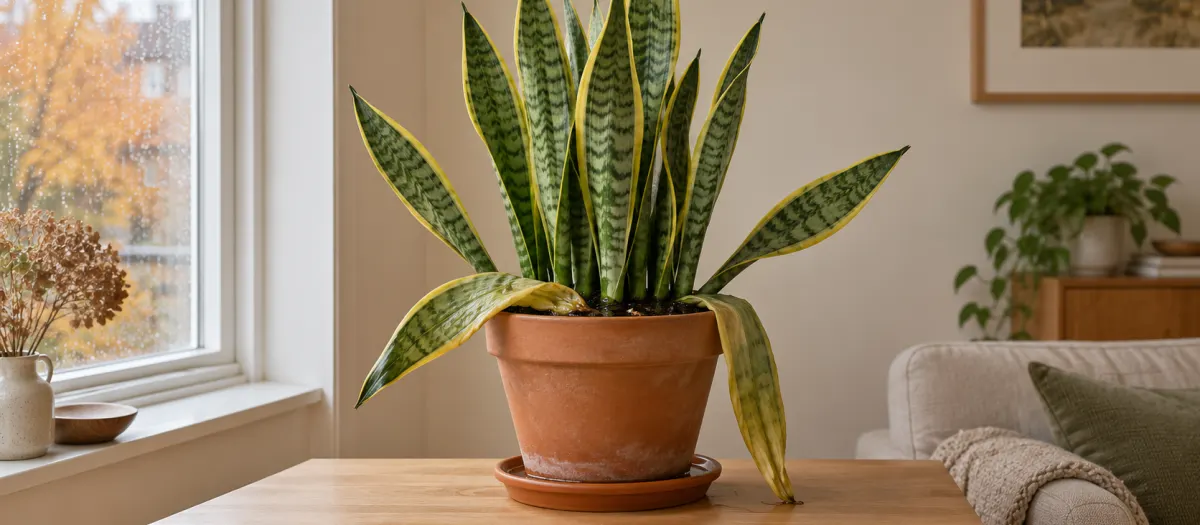
A snake plant with soft leaves has almost always had too much water: its soil stays wet, its roots rot, and the base of the leaves softens until they droop. If its leaves stay firm but fall over, it is more likely short of light; if they wrinkle, it is short of water.
Fall is the risky season. From late October to February, the snake plant, also called mother-in-law's tongue, is resting and drinks very little: watering it as often as in summer is enough to waterlog its soil.
Soft, wrinkled or falling over: what is the leaf telling you?
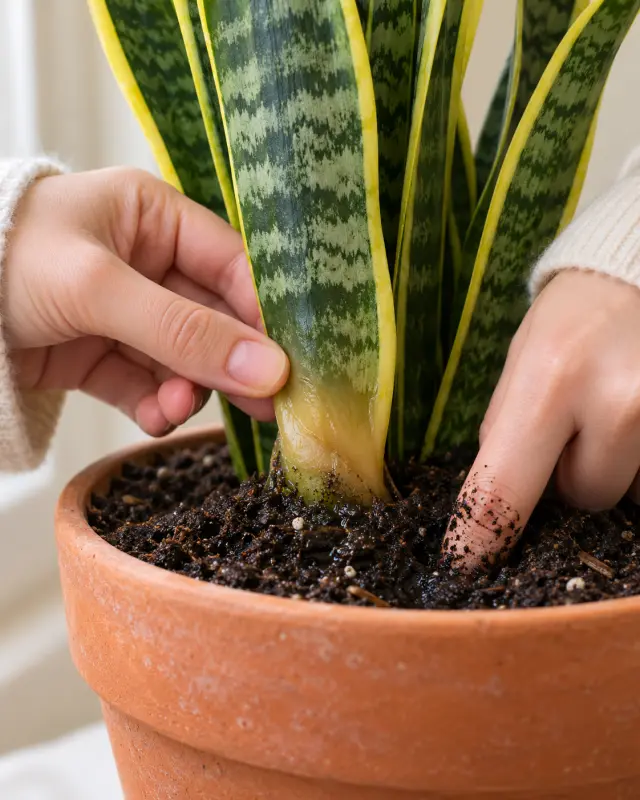
Pinch the base of a damaged leaf, then push a finger into the soil. A soft base in wet soil means the roots are rotting. A wrinkled but firm leaf, in soil that has been dry for weeks, means the plant is short of water. A firm, long, thin leaf that falls over is more likely short of light.
| What you see | Most likely cause | First step |
|---|---|---|
| Leaves soft at the base, wet soil | overwatering: the roots are rotting | stop watering and check the roots |
| Leaves turning yellow and soft | soil that stays wet, especially in winter | let the soil dry and water less often |
| Leaves wrinkled but firm, dry soil | underwatering | water thoroughly, then let the soil dry |
| Firm, long, thin leaves that fall over | lack of light, or too much fertilizer | move it closer to a window and support the leaves |
| White, sunken spots | a cold snap between 36 and 46 °F (2 and 8 °C), sometimes a month earlier | keep it away from cold windows |
💡 Snake plants die from too much water more often than from being forgotten. Arroseo, the free app, sends you a reminder to check the soil. In winter, set it to once a month. Add your snake plant to Arroseo
Overwatered snake plant: how can you save it?
A soft leaf base means roots damaged by overwatering, the leading cause of failure with this plant. Watering again would make things worse. Act quickly, and wear gloves, because its sap irritates the skin:
- stop watering and empty the saucer
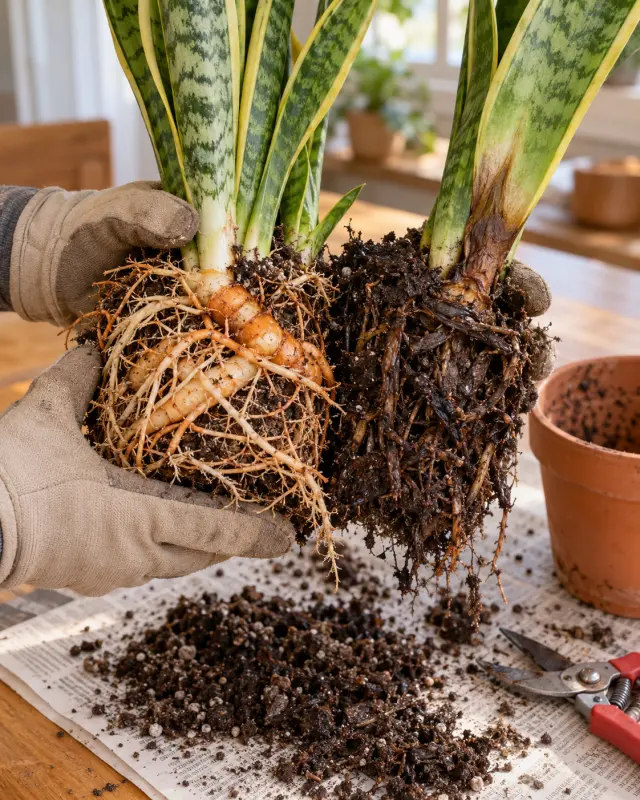
- take the snake plant out of its pot and look at its roots: healthy ones are pale and firm; rotten ones are brown or black, and mushy
- cut off the rotten roots and the soft leaves at their base
- repot it in a pot with drainage holes, with fresh, well-draining soil
- wait until the soil has dried before watering again
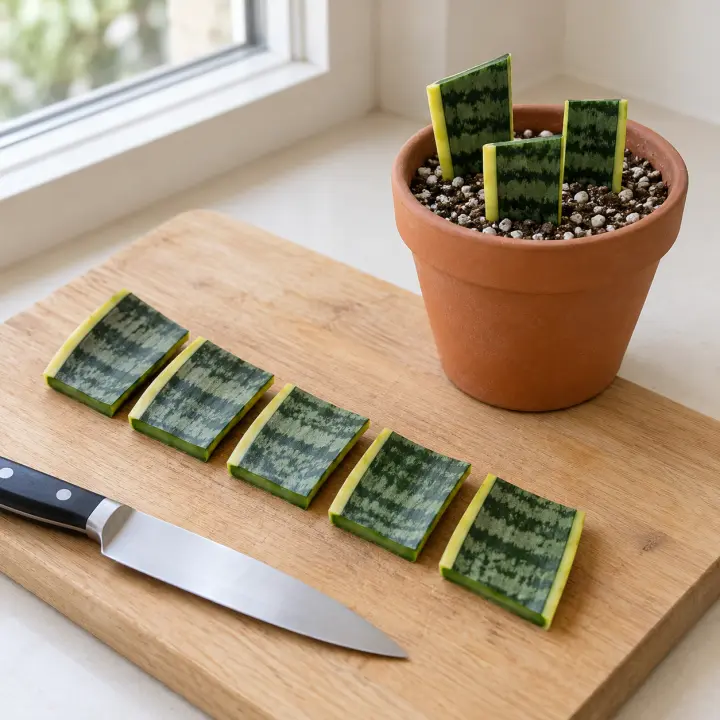
If all the roots are rotten, the plant probably won't recover, but its healthy leaves can still give you new snake plants. Cut a firm leaf into 2-inch (5 cm) pieces. Plant each piece upright, 3/4 inch (2 cm) deep, by the edge that was closest to the roots, in well-draining soil. Put the pot in a bright spot, out of direct sun, at about 68 °F (20 °C). These cuttings root best in spring.
To recognize the other signs of overwatering, read our article on overwatered plants.
Why are my snake plant leaves bending over?
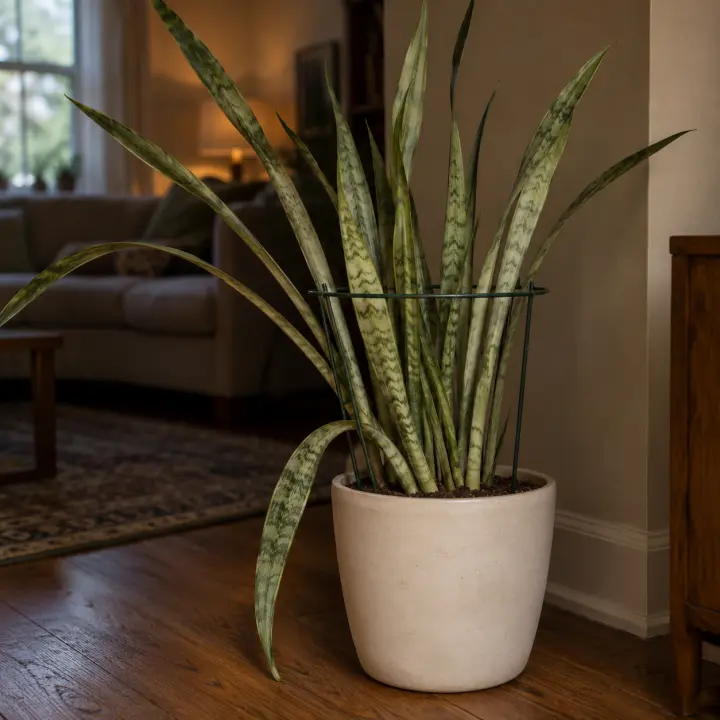
If the leaf bends at its base and that base is soft, it is the rot described above. If the leaf stays firm, the snake plant is most often short of light. It tolerates shade, but in a corner that is too dim its new leaves grow longer and thinner until they can no longer stand up. Too much fertilizer has the same effect. In winter, water and fertilizer push it to grow while the sun is too weak for sturdy growth: its leaves stretch.
A leaf that has fallen over won't stand up again on its own, even in good light. Hold it up with a stake or a support ring pushed into the pot, or cut it off at its base: by removing the overly long leaves little by little, you give the plant back its shape. Then move it closer to a window.
When should you water a snake plant?
From March to October, water it when its soil has dried out completely, not just on the surface. Water thoroughly, then empty the saucer or cachepot: its roots can't stand sitting in water. Keep it in a pot with drainage holes, and repot it only once its roots have filled the pot.
From late October to February, it rests: water it every one to two months, just enough to keep its leaves from wrinkling, and don't feed it. The cooler the room, the longer the soil takes to dry. Find the guidelines for other plants in our article on how often to water.
Can cold damage a snake plant?
Yes. The snake plant was one of the first plants found to be sensitive to cold. Between 36 and 46 °F (2 and 8 °C), white, sunken, irregular spots appear on its leaves, sometimes up to a month later: by the time the damage shows, the cold snap is often forgotten. A plant that has been given a lot of fertilizer suffers more.
Keep it above 50 °F (10 °C), away from cold windows at night and from open windows in winter. If it spent the summer outdoors, bring it in before the first cool nights: our calendar tells you when to bring your plants inside.
Where should you put a snake plant?
Put it near a bright window: it can take a few hours of direct sun a day, but not the full summer sun through glass. In fall and winter, the sun gets weaker: move it closer to the window, or give it a grow light. The snake plant is one of the easiest houseplants, as long as you don't drown it.
Keep it out of reach of cats, dogs and young children. It is toxic if eaten: its saponins cause nausea, vomiting and diarrhea. If your pet has eaten some, call your vet.
Frequently asked questions
Can a bent snake plant leaf stand up again?
No, a leaf that has fallen over won't stand up again on its own. Support it with a stake or a ring, or cut it off at its base, then move the plant closer to a window so its new leaves are sturdier.
Should you cut off soft snake plant leaves?
Yes, at their base, wearing gloves. Then check the roots: a leaf that is soft at the base almost always means overwatering.
How often should you water a snake plant in winter?
Every one to two months, from late October to February, just enough to keep its leaves from wrinkling. Don't feed it until spring.
How can I tell if my snake plant needs water?
Its leaves wrinkle while staying firm at the base, and its soil has been dry for weeks. Water it thoroughly, then let the soil dry before the next watering.
Is the snake plant toxic to cats?
Yes, to cats and to dogs: its saponins cause nausea, vomiting and diarrhea. Keep it out of their reach, and call your vet if your pet has eaten some.
This winter, check before you water
Arroseo sends you a reminder to check the soil of each plant, on the schedule you choose. The app also keeps a history of your waterings. Worried about a soft or spotted leaf? Arroseo+'s health diagnosis points you to the likely cause.
Download the app