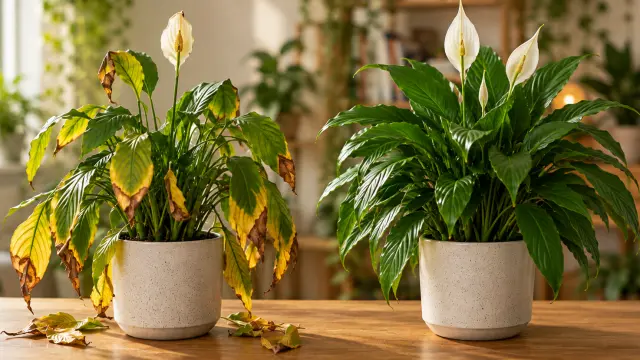
An overwatered plant has soil that stays damp for days after watering, with limp leaves that turn yellow, turn brown or drop. To save it, stop watering, empty any standing water, let the soil dry out, then check the roots: repot only if they are dark and mushy.
The trap is that a wilting plant looks like a thirsty plant. The Royal Horticultural Society (RHS), the UK's gardening authority, points it out: overwatering is easily mistaken for underwatering, and the plant ends up drowned by being watered again. So here is the order to follow: first check that overwatering really is the cause, then choose the action that matches the plant's condition, because repotting is not always necessary.
Overwatering or underwatering: how can you tell?
Leaves alone are not enough: a plant that lacks water and a plant that gets too much can both turn yellow and droop. The soil, on the other hand, settles the question.
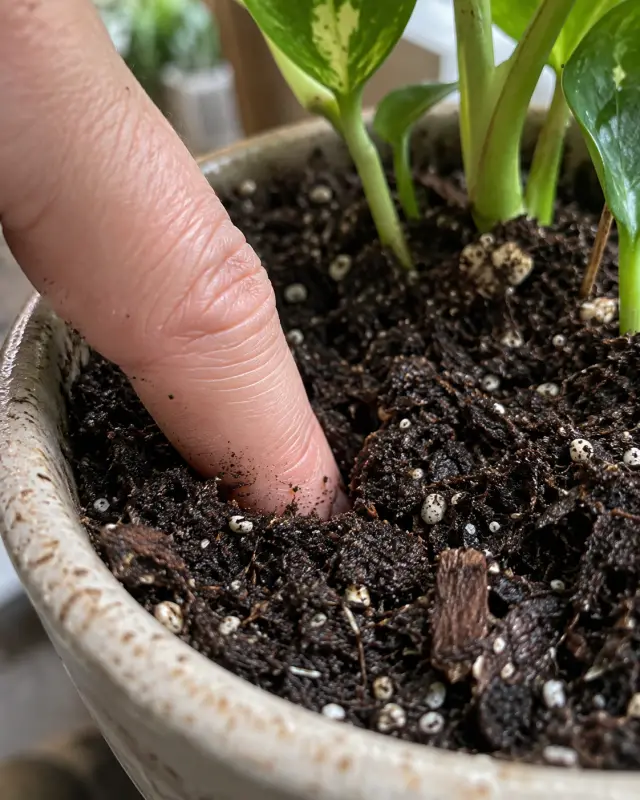
Push a finger a few centimeters into the soil, then lift the pot. Several days after the last watering, a heavy pot and damp or soggy soil point to overwatering; a light pot and soil that is dry deep down point to underwatering.
| Sign | Overwatering | Underwatering |
|---|---|---|
| Soil | damp or soggy, even several days after watering | dry deep down |
| Pot | heavy | light |
| Yellowing | old and new leaves at the same time | oldest leaves, at the base, first |
| Browning | in the middle of the leaves | on the edges of the leaves |
| Leaves | limp, sometimes with blisters | wilted or curled |
💡 Arroseo lets you take care of your plants, without watering at random: each one has its own rhythm of reminders. Download the app
If the soil is damp while the plant wilts, don't water: overwatering is the first lead to explore.
What are the signs of an overwatered plant?
Beyond limp leaves, several clues confirm overwatering:
- soil that stays damp for several days after watering
- old and new leaves that turn yellow and drop at the same time
- browning in the middle of the leaves
- blisters on the surface of the leaves, called edema, which the RHS links to excessive water uptake
- soft or blackened stems at the base
- mold or moss on the soil
- fungus gnats around the pot
- growth that has stopped
Constantly damp soil attracts fungus gnats and encourages mold. Overwatering is also the first cause to rule out when a monstera loses its leaves.
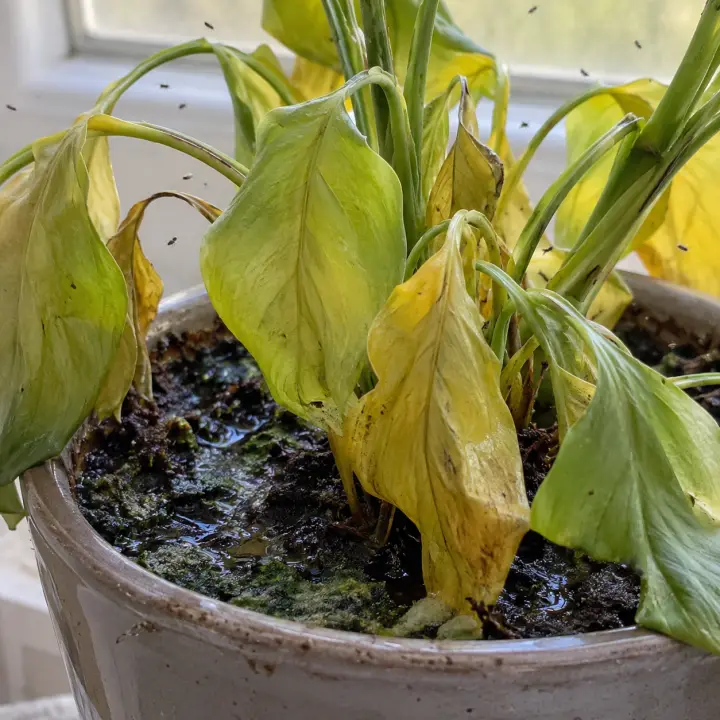
The most serious sign is hidden under the soil. Deprived of air by standing water, the roots rot and stop feeding the plant: they turn dark and mushy, sometimes foul-smelling. A healthy root, by contrast, stays firm and pale. For the other symptoms, read our article on recognizing an unhealthy houseplant.
Why is an indoor plant overwatered?
The amount of water is not the only factor. Overwatering most often comes from soil that has no time to dry out between waterings, for one of these reasons:
- a fixed watering schedule, whatever the plant's needs
- a saucer or cachepot where water stands
- a pot with no drainage hole
- soil that is too dense and holds water
- a pot that is too big for the roots
- a season when the plant uses less water, such as fall and winter
Keeping the summer rhythm in fall is one of the most common reflexes: our article on when to bring your houseplants indoors points it out, and our article on the ideal watering frequency explains how to adjust it.
What can you do to save an overwatered plant?
The right actions depend on the plant's condition. Start with the first step, then move on to the next ones only if they are needed.
Step 1: stop watering and get rid of the water
- empty the saucer and the cachepot
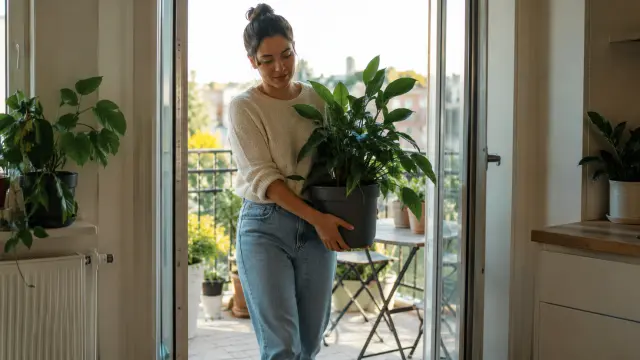
- put the plant somewhere bright, out of direct sun and drafts
- let the top few centimeters of soil dry out before watering again
If the plant is still firm and the soil is merely damp, this step may be enough.
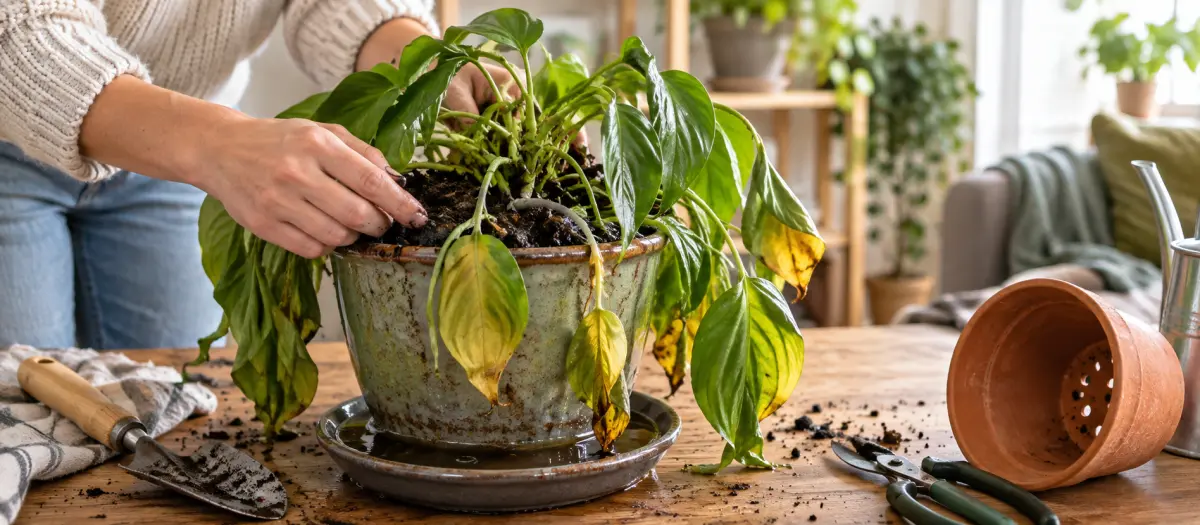
Step 2: take the plant out of its pot to examine the roots
If the leaves stay limp while the soil is soggy, gently take out the root ball, as the RHS advises, and look at the roots. Firm, pale roots are healthy: put the plant back in its pot once the excess water has drained. If the soil stays soggy and dense, replace it with fresh, well-draining soil.
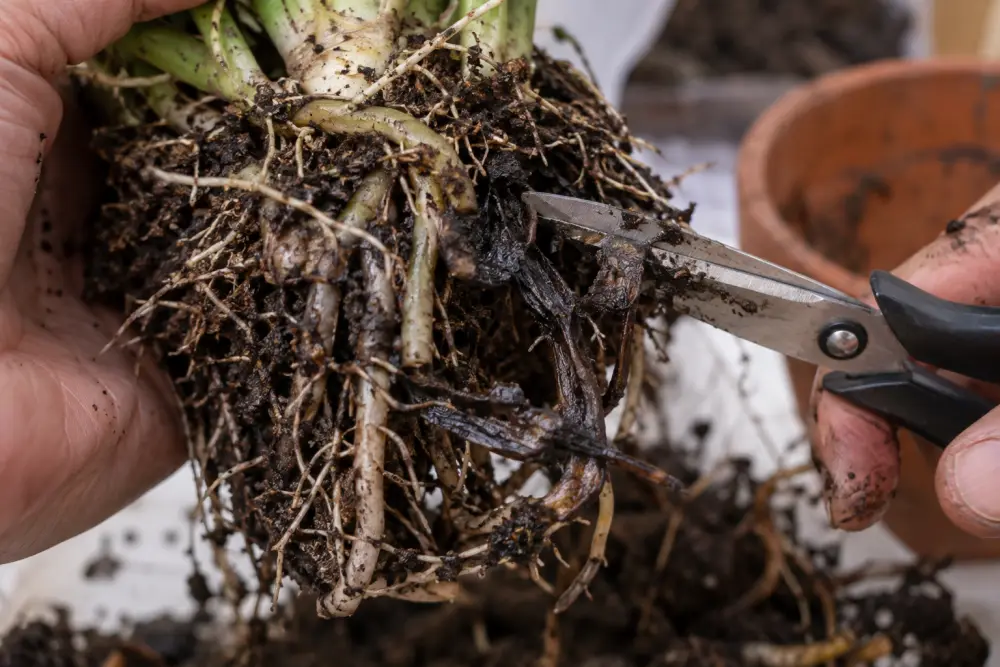
Step 3: if the roots are rotten, trim and repot
- cut off the dark, mushy roots with clean scissors
- remove the soggy soil
- repot the plant in a pot with drainage holes, using fresh, well-draining soil
- water lightly, then wait until the top few centimeters are dry before watering again
- don't add fertilizer until new growth appears
How long does a plant take to recover?
No timeframe is guaranteed: depending on the condition of the roots, it often takes several weeks before new growth appears. As long as healthy roots remain, the plant can bounce back; if all the roots are rotten, the chances of saving it are very slim.
A leaf that has turned yellow or black does not regain its color. Remove it if it is completely damaged, and watch the new leaves instead: they are the ones that show the plant is recovering.
How can you prevent overwatering in the future?
Replace the calendar with the finger test: as a general rule, water when the top few centimeters of soil are dry, or when the soil is completely dry for succulents. A few habits are enough:
- check the soil before every watering, rather than watering on a fixed day
- empty the saucer and the cachepot after every watering
- choose a pot with drainage holes and well-draining soil
- water less often in fall and winter, without stopping altogether
- note the date of each plant's last watering
Frequently asked questions
Can an overwatered plant recover?
Yes, as long as healthy roots remain. Stop watering, let the soil dry out, then check the roots. If all the roots are rotten, the chances of saving it are very slim.
Should you repot an overwatered plant?
Not always. If the roots are firm and pale, simply let the soil dry out. Repot in fresh, well-draining soil if the roots are dark and mushy, or if the soil stays soggy and dense.
How do you tell overwatering from underwatering?
Check the soil: it is damp or soggy with overwatering, and dry deep down with underwatering. Leaves alone are not enough, because both causes lead to yellowing and wilting.
How long should you let the soil dry out?
Until the top few centimeters are dry, or until the soil is completely dry for succulents. There is no fixed duration: it depends on the plant, the pot, the light and the season.
Are fungus gnats a sign of overwatering?
Often, yes: constantly damp soil attracts fungus gnats. Let it dry out between waterings.
Sources: Royal Horticultural Society, “How to help a poorly houseplant” and “Leaf damage on houseplants”.
Water when your plant needs it, not when the calendar says so
Arroseo sets a rhythm of reminders for each plant and lets you adjust it to the season, the light and the pot. Doubts about yellow leaves? Arroseo+'s health diagnosis points you to a likely cause.
Download the app