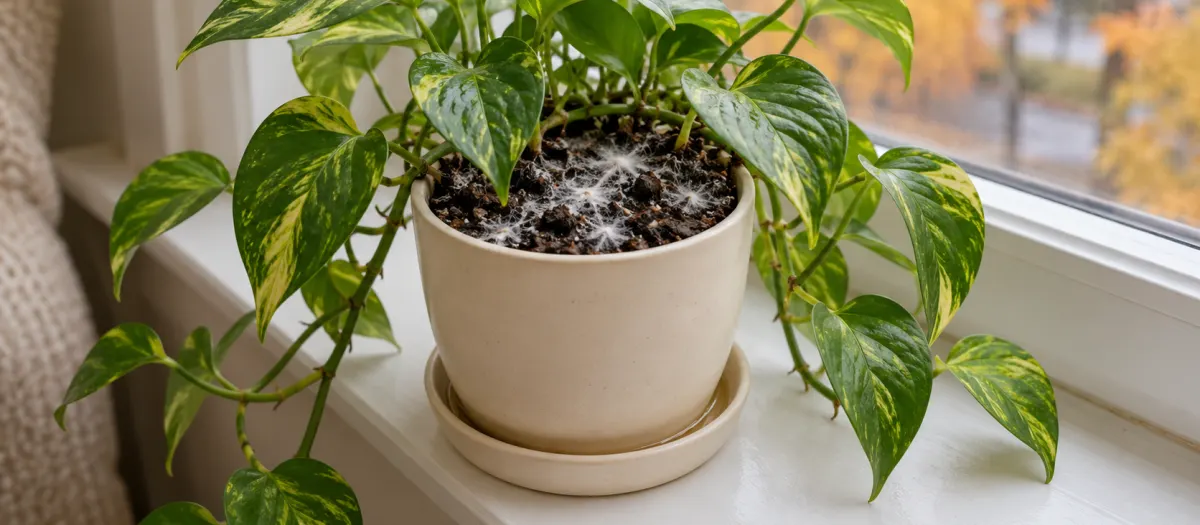
White or grayish fuzz on the soil is almost always mold: a fungus that grows on soil that stays wet. This fungus usually doesn't harm the plant, but it means you water too often or the soil dries poorly. Scrape it off, then let the surface dry between waterings.
Before you scrape, make sure it really is mold. A hard crust, round grains or a cottony clump on the stems don't come from the same cause and aren't treated the same way.
What is this white stuff on the soil?
Look at it closely, then touch it with the tip of a pencil. Depending on its texture, this white deposit can have five different causes.
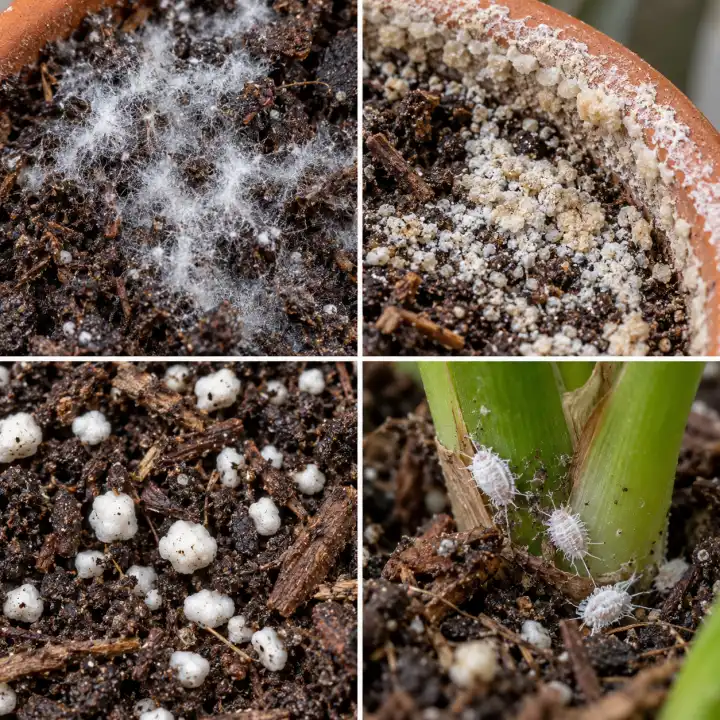
White or gray fuzz that spreads: mold
This light film is a fungus. It appears when the soil surface stays wet from one watering to the next, especially when air doesn't circulate well between pots. A green film is algae: same cause, same fix.
A hard white or beige crust: salts
This crystalline crust also forms on the rim of the pot. It is made of salts from fertilizer, tap water or the potting mix itself: they rise to the surface with the water, especially if the pot sits in a full saucer. In excess, they damage the roots and burn the leaf tips.
Round, hard white grains: perlite
These small, light beads are perlite: a volcanic rock added to potting mix to aerate it. They are part of the soil and need nothing.
Cottony clumps on the stems or at the base: mealybugs
These small insects, 1/8 to 1/4 inch (3 to 6 mm) long, cover themselves with a white wax that makes them look like cotton. They hide mostly under the leaves and where the leaves meet the stems, and one species lives on the roots. They suck the sap and slow the plant's growth.
Tiny white insects in the soil: springtails
These tiny white or black creatures live in the soil. Their presence also means the soil is overwatered.
A small bright yellow mushroom has popped up in the pot? That's another case, covered below.
💡 Mold keeps coming back as long as the soil stays wet. Arroseo, the free app, sends you a reminder to check each plant's soil before you water it. Add your plants to Arroseo
How do you get rid of mold on the soil?
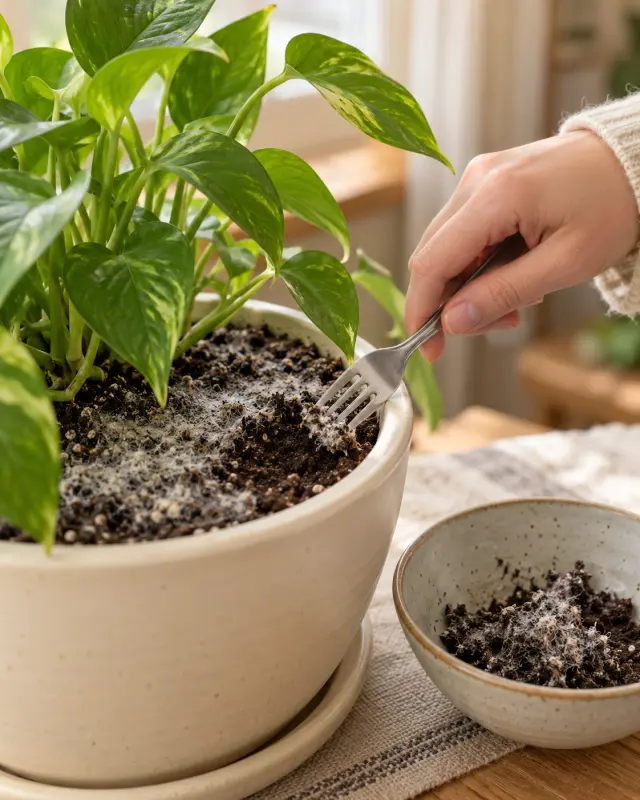
- scrape off the fuzz with a fork, or remove the layer of soil it covers
- replace the soil you removed with fresh potting mix
- let the surface dry between waterings
- empty the saucer or cachepot after each watering
- space out the pots so air can circulate between them
There's no need to add baking soda, cinnamon or a fungicide: as long as the soil stays wet, the mold comes back. Don't let it build up, though. A thick mat hardens into a crust and keeps water from soaking into the soil. It also attracts fungus gnats, whose larvae feed on the roots.
In fall and winter, soil dries more slowly: touch it before each watering and water only when the surface is dry. Our article on how often to water gives guidelines by type of plant. If the leaves turn yellow or soft as well, overwatering may have reached the roots: read how to save an overwatered plant.
How do you get rid of a white salt crust?
Rinse the soil in a sink to wash the salts away:
- remove the crust and about 3/4 inch (2 cm) of soil from the surface
- set the pot in the sink without its saucer, with the drainage holes clear
- fill the pot to the top with lukewarm water, let it drain, then do it once more
- scrape the salts off the pot, the holes and the saucer
- top up with fresh potting mix and water lightly
Then wait until the soil feels dry before watering again. To keep the crust from coming back, use the fertilizer dose on the label, water thoroughly so water runs out the bottom of the pot, and empty the saucer. If the crust is very thick, repot the plant in fresh potting mix instead.
How do you get rid of mealybugs and springtails?
For a few mealybugs, remove them one by one with a cotton swab dipped in rubbing alcohol, or spray an insecticidal soap. Check the undersides of the leaves and where the leaves meet the stems, where they hide most often. To recognize other pests, see our guide to spotting a sick plant.
For springtails, simply let the soil dry between waterings.
Yellow mushrooms in the pot: are they dangerous?
Small lemon-yellow mushrooms, 1 to 3 inches (2.5 to 7.5 cm) tall, sometimes pop up in houseplant pots. They break down dead organic matter in the soil and don't harm the plant. They are, however, poisonous if eaten: remove them as soon as they appear if you have children or pets. Fungicides generally don't work against them.
Frequently asked questions
Is white mold on the soil harmful to the plant?
Usually not. It means the soil stays wet. A thick layer, though, keeps water from soaking in and attracts fungus gnats: scrape it off and let the surface dry between waterings.
Should you repot a plant whose soil has gone moldy?
Not necessarily. Most of the time, removing the top layer, replacing it with fresh potting mix and watering less often is enough.
Why is the rim of my pot turning white?
Those are salts from fertilizer or tap water. Scrape them off, rinse the soil thoroughly in a sink, and empty the saucer after each watering.
Water only once the soil has dried
Arroseo sends you a reminder to check the soil of each plant, on the schedule you choose, and keeps a history of your waterings. Puzzled by a spot or a deposit? Arroseo+'s health diagnosis points you to the likely cause.
Download the app