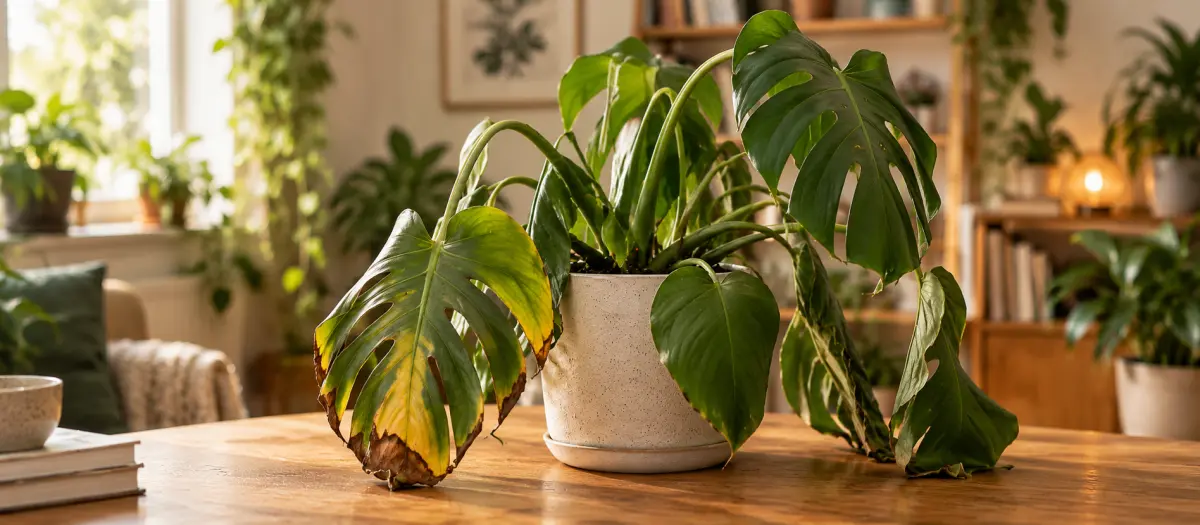
Are your monstera's leaves drooping, limp or eventually falling off? The most common cause is overwatering, but underwatering, low light or a sudden change of environment can also be responsible. If the whole plant is flopping over, it may need a support pole.
To find the cause, start with the soil: still damp several days after watering, it points to overwatering; dry deep down, to underwatering. If the soil is neither soggy nor dry, look at the light, the pot and the support.
Drooping monstera: which cause matches the symptoms?
| What you see | Most likely cause | First step |
|---|---|---|
| Limp leaves, soil still damp several days after watering | overwatering | let the soil dry out before watering again |
| Limp or curled leaves, soil dry deep down | underwatering | water gradually |
| Long, leaning stems, small new leaves without splits | low light | move it closer to a window, out of direct sun |
| The whole plant flops over, stems splay out or lie down | lack of support | add a support pole and tie the stems to it |
| Roots coming out of the drainage holes, soil that dries out very fast | a pot that has become too small | repot into a pot just slightly bigger |
| Leaves dropping after a move, after repotting or near a draft | stress from a change of environment | keep it away from drafts and give it a few weeks |
1. Overwatering
The most frequent cause of falling leaves is watering too much. When the roots stay constantly wet, they lack oxygen, start to rot, and the plant weakens quickly.
Signs to watch for:
- soil still damp several days after watering
- limp leaves
- yellowing foliage
- blackened stems
- water droplets at the leaf tips
If any of these signs sound familiar, it's best to space out watering and check the soil's moisture before watering again: water a monstera when the top 1 to 2 inches of soil are dry. To adjust that rhythm, read our article on the ideal watering frequency. If the soil is already soggy, our article explains how to save an overwatered plant.
💡 A monstera is often overwatered because it is watered on a fixed schedule. In Arroseo, a free app, you lengthen the watering interval from the plant's profile and the next reminder is calculated from the last watering. Unsure about the leaves? Arroseo+'s health diagnosis points to a probable cause. Download the app
2. Underwatering
Conversely, a very dehydrated monstera can also have falling leaves.
Signs to watch for:
- completely dry soil
- curled leaves
- dry edges
In this case, gradual watering can help the plant recover.
3. Low light
A monstera loves bright spots without direct sun. If it lacks light, its growth slows down, its leaves get smaller and its stems weaken, stretch out and lean toward the window. New leaves, for their part, no longer develop splits. Move it closer to a window, without exposing it to direct sun.
4. Lack of support
In the wild, the monstera, also called Swiss cheese plant, climbs trees by clinging to them with its aerial roots. In a pot with no support, its stems, weighed down by large leaves, splay out, flop over and can snap: the plant looks droopy even when its leaves stay firm and green.
Push a sturdy support into the pot, ideally a moss-covered pole, and tie the stems to it loosely. Guide the aerial roots toward the pole: they grip it better if you moisten the moss when you water.
5. A pot that's too small, or recent repotting
A monstera that has filled its pot with roots no longer has enough soil to hold water: the soil dries out very fast and the leaves go limp, even with regular watering. Roots coming out of the drainage holes mean it's time to repot.
Choose a pot about 2 inches wider, no more: a pot that's too big holds too much water and encourages root rot. After repotting, it's normal for the plant to droop a little: with the right watering and good light, it perks back up in time.
6. A sudden change of environment
Monsteras are sensitive to drafts, moves and temperature changes. After being relocated, it's normal for a plant to show signs of stress for a few weeks.
This is exactly what happens in the fall, when a monstera that spent the summer outdoors comes back inside: a transition that is too abrupt can be enough to make its leaves drop, whereas a gradual acclimation over a few days greatly limits the shock.
The ficus is even more sensitive to this: a simple move can make it lose a large share of its leaves, as explained in our article on ficus dropping leaves.
In winter, a monstera also dislikes cold drafts: it grows well between 65 and 77 °F (18 to 25 °C) and stops growing below 50 °F (10 °C). Keep it away from doors and windows you open often.
How to help a weakened monstera recover
Before acting, check:
- soil moisture
- drainage
- available light
- root condition
- support
- leaf undersides
Under the leaves, look for pests: monsteras have few indoors, but scale insects, mealybugs, aphids, spider mites or thrips can settle in.
Also avoid watering "out of habit": every environment is different, and that reflex is precisely what most often causes signs of poor health in houseplants.
Frequently asked questions
Why are my monstera's leaves falling or turning limp?
The most common cause is overwatering, which rots the roots. Underwatering, low light, a pot that's too small, lack of support or a sudden change of environment can also be responsible.
How do I know if I'm overwatering my monstera?
Soil that stays damp for several days, limp leaves, yellowing foliage or blackened stems are typical signs of overwatering.
How long does a monstera take to recover after stress?
After a move, a draft or a change in light, it's normal for a monstera to show signs of stress for a few weeks before bouncing back.
How can I help a weakened monstera recover?
Check the soil moisture, drainage, available light, root condition, support and leaf undersides, and avoid watering out of habit rather than based on the plant's actual needs.
How do I get a drooping monstera to stand up straight?
Push a sturdy support into the pot, ideally a moss-covered pole, and tie the stems to it loosely. If the soil is soggy or very dry, fix the watering first: a monstera that gets too little or too much water droops too.
Will droopy monstera leaves recover?
Yes, if a leaf is only limp from lack of water: it firms up once the soil has been watered. A leaf that has turned yellow or black won't turn green again: remove it and watch the new leaves instead.
Why is my monstera dripping water from its leaf tips?
Its soil is too wet: the plant pushes the excess water out through its leaves. Let the top inch or so of soil dry before watering again.
Don't let your monstera suffer in silence
Arroseo reminds you to water your monstera on its own schedule, counted from your last watering, and keeps a record of its care. Leaves dropping? The Arroseo+ health diagnosis points you to the likely cause.
Download the app