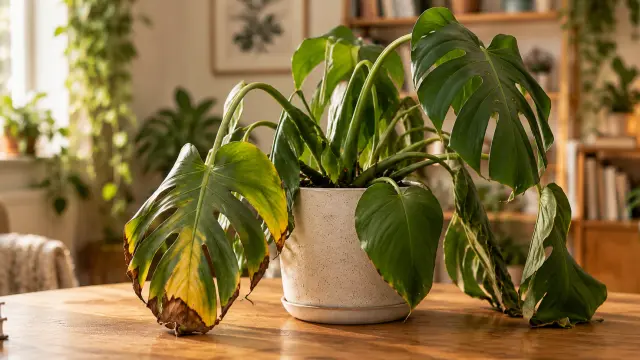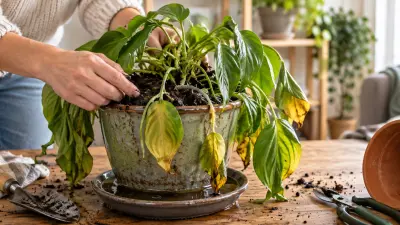

A ficus drops its leaves when its surroundings change: a move, less light in the fall, a draft, the heating coming back on or irregular watering. In most cases it survives and grows new leaves once the cause is fixed. Just don't water it more to "save" it.
It's the classic trap: the leaves fall, you think the plant is thirsty, you water more, and overwatering makes even more leaves drop.
Green, yellow or sticky leaves: what is the leaf drop telling you?
The fallen leaves, and the undersides of the ones still on the plant, already point to the cause.
| What you see | Most likely cause | First step |
|---|---|---|
| Green leaves falling all at once | a sudden change: a move, a draft, less light or a drop in temperature | put it in a bright spot away from drafts, and let it adjust |
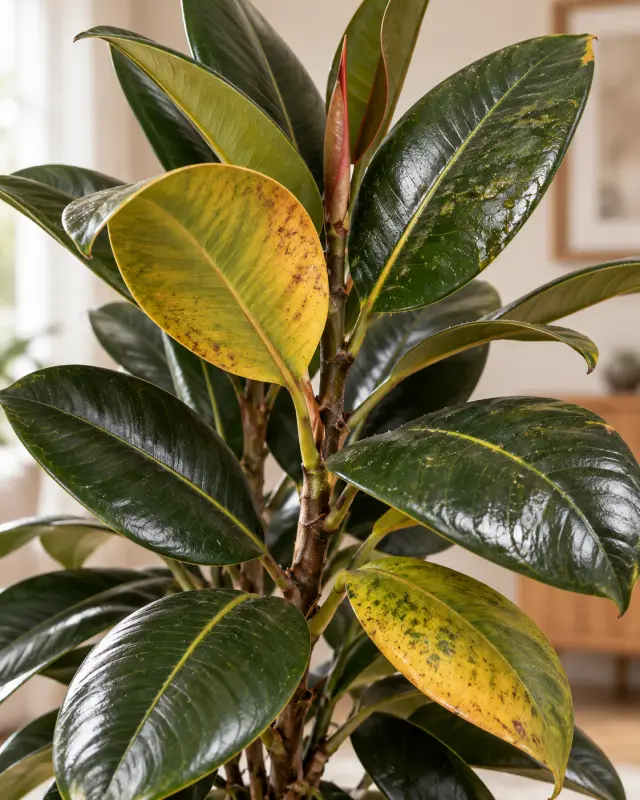
| Leaves turning yellow before falling | watering: overwatering or underwatering | touch the soil before watering |
| A few lower leaves turning yellow | normal leaf renewal, especially in winter | keep an eye on new growth |
| Sticky leaves, sometimes blackened | scale insects, whose sticky honeydew gets covered in a black fungus, sooty mold | check the stems and the undersides of the leaves |
| Brown spots on a fiddle-leaf fig | temperature swings near a radiator or air conditioner, or direct sun | move it away from vents and direct sun |
💡 To take care of your ficus, you need Arroseo. Each plant gets its own watering reminder, on a schedule you stretch out in winter: you water when your ficus needs it, never out of habit. Download the app
What makes a ficus drop its leaves?
1. A change of place
Ficus hate being moved. The trip home from the garden center, a new room, repotting or coming back indoors before winter is enough to make them drop leaves, sometimes a lot. In a bright spot away from drafts, a ficus adjusts within a few weeks and puts out new growth. So don't move it a second time: every move is a new shock.
In the fall, to limit the shock of coming back indoors, follow our calendar for bringing your plants in before winter.
2. Not enough light
In late fall, as the days get shorter, a weeping fig can lose a large share of its green leaves, until it's almost bare. Its buds stay green. Place your ficus near a bright window, out of direct sun. In spring, a few green leaves dropping as new growth starts is normal.
3. Too much or irregular watering
It's one of the most common problems. Soggy soil, or water standing in the saucer, rots the roots. On the other hand, soil that dries out completely also makes the leaves drop. Touch the soil before watering: it should be dry a few inches down, a little more in winter. Use room-temperature water, since cold water is one of the shocks that trigger leaf drop.
If the soil is already soggy, follow our steps to save an overwatered plant, then find the right watering frequency.
4. Drafts and heating
Radiators, heating or air conditioning vents, front doors, windows that are often open: all of them expose the ficus to temperature swings that make it drop leaves in droves. On a fiddle-leaf fig, these swings also leave brown spots. Keep your ficus away from them, without depriving it of light.
5. Pests
Scale insects, mealybugs, spider mites and thrips all attack ficus. Sticky leaves often point to scale: some species release honeydew that gets covered in a black fungus, sooty mold. Check the stems and the undersides of the leaves for small bumps. To rule out another cause, learn to spot an unhealthy plant.
Weeping fig, ginseng, rubber plant, fiddle-leaf fig: what changes by variety
Ficus benjamina (weeping fig)
Known for being temperamental, it reacts to the slightest change, even a gradual one, and can end up almost bare in late fall.
Ficus ginseng (Ficus microcarpa)
Sold as a small bonsai, it dislikes overwatering, which rots its roots, and likes humid air. It needs plenty of light and tolerates direct sun for part of the day.
Ficus elastica (rubber plant)
Losing a lower leaf from time to time, yellowing first, is normal for it. Overwatering, cold and drafts, on the other hand, trigger real leaf drop. Water it less from fall to late winter.
Ficus lyrata (fiddle-leaf fig)
Sensitive to overwatering and underwatering alike, it handles drafts and irregular watering poorly. Its leaves get brown spots near a radiator or vent, and scorch in direct sun.
How do you revive a ficus that's dropping leaves?
What to do:
- touch the soil before each watering and only water if it's dry a few inches down
- empty the saucer or cachepot after watering
- water with room-temperature water
- place it near a bright window
- keep it away from radiators, vents and doors
- check the stems and the undersides of the leaves
What to avoid:
- don't water it more because it's dropping leaves
- don't move it again if it's already in the right spot
- don't repot it in the middle of leaf drop: repotting also makes leaves fall
How do you get a ficus that lost its leaves growing again?
Fix the cause, then give it time, without moving it or watering it more. Allow a few weeks after a move. Even when almost bare, a weeping fig usually keeps green buds on its branches: that's where the new leaves come from.
Frequently asked questions
Why does a ficus drop its leaves?
Usually because something changed: a move, less light, a draft, heating, too much or irregular watering. Sticky leaves point to scale insects instead.
Is it normal for a ficus to lose leaves in the fall?
Partly, yes: as the days get shorter, it drops leaves, sometimes a lot for a weeping fig. Put it near a bright window and keep watering regularly, without increasing it.
Why is my ficus dropping green leaves?
Usually because of a sudden change: a move, a draft, less light or a drop in temperature.
Should you water a ficus that's dropping leaves?
Only if the soil is dry a few inches down. Watering more because the leaves are falling is the most common trap: overwatering makes even more of them drop.
My ficus has lost almost all its leaves: is it dead?
Not necessarily. As long as its buds stay green, it can grow new leaves once the cause is fixed.
Why are my ficus leaves sticky?
Scale insects are often to blame: some release sticky honeydew onto the leaves. Check the stems and the undersides of the leaves.
Keep your ficus healthy all winter
Arroseo reminds you to water it on its own schedule and keeps a record of its care. Leaves falling? The Arroseo+ health diagnosis points you to the likely cause.
Download the app