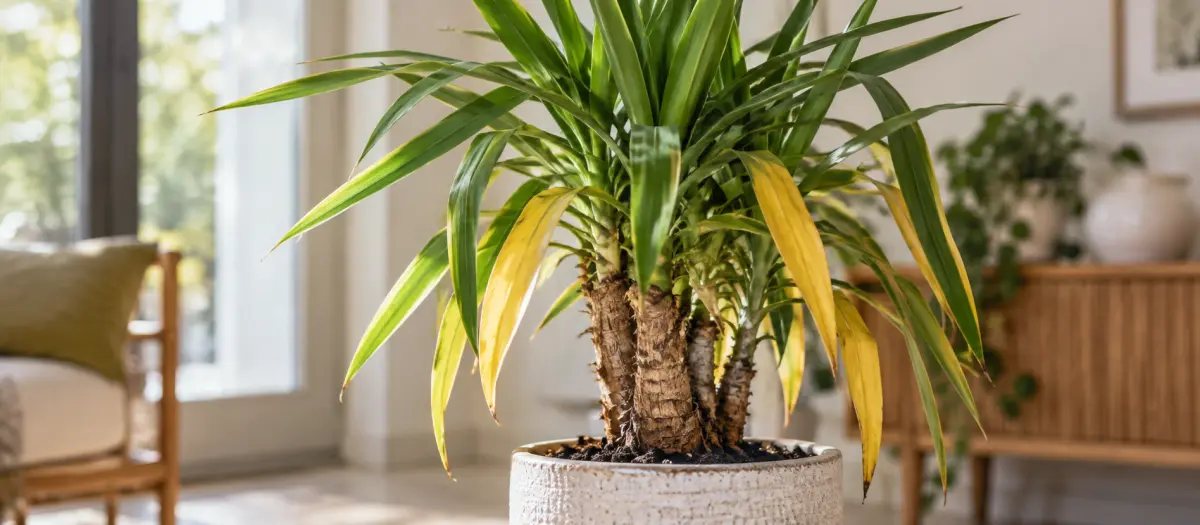
An indoor yucca sheds its lower leaves as its trunk grows: they turn yellow, dry out and fall one at a time, and that's normal. When several leaves turn yellow all at once and go soft, the cause is most often overwatering, which rots the roots.
A dry-climate plant, the yucca copes well with a missed watering, much less with soil that stays wet. In fall, two more causes of yellow leaves come into play: moving back indoors and lower light.
Normal or a warning sign: how can you tell?
Look at which leaves are turning yellow and how fast, then touch them.
| What you see | Most likely cause | First step |
|---|---|---|
| Now and then, a lower leaf that turns yellow, then dries | normal leaf turnover: as it grows, a yucca sheds its lower leaves | remove it once it's dry |
| Several leaves turning yellow all at once and going soft | overwatering: the roots are rotting | stop watering and check the roots |
| Soft base of the trunk | rot has reached the trunk | propagate the top part, still firm |
| Stretching stems, fading foliage | lack of light | move it closer to a window |
| Leaf tips turning brown | dry air from the heating, or too much fertilizer | move it away from the radiator and stop fertilizing in winter |
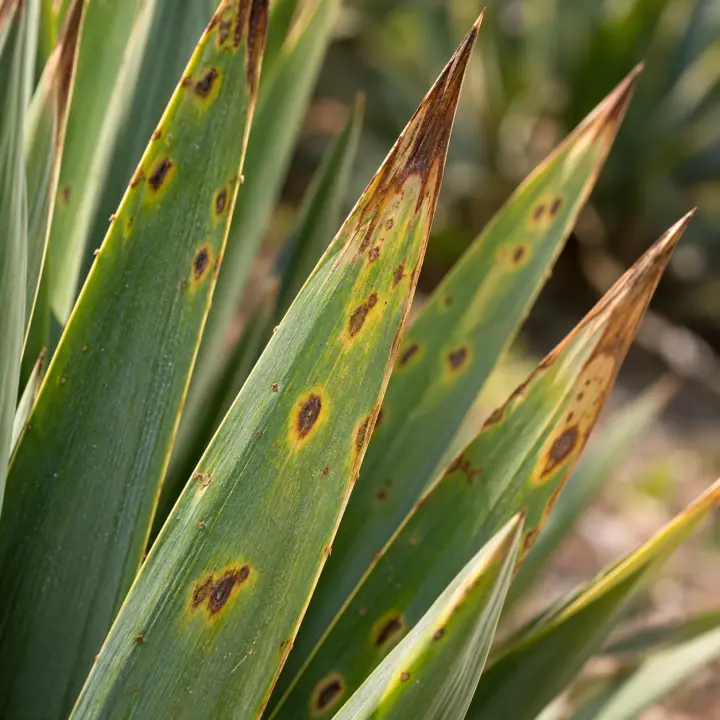
| Small oval spots, yellow then brown | a fungal leaf disease, not serious | remove badly affected leaves and stop wetting the foliage |
💡 To stop drowning your yucca, you need Arroseo. The app sends you personalized watering notifications: you set your yucca's schedule, with longer gaps in winter, and it alerts you on the due date, counted from your last watering. Download the app
Why is my yucca turning yellow?
An indoor yucca is most often a spineless yucca (Yucca elephantipes, also called Yucca gigantea), with a thick trunk and soft leaves without spines. Six causes turn its leaves yellow.
1. Overwatering
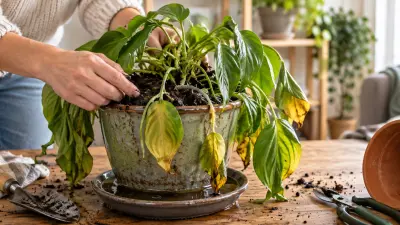
It's the most common cause. In soil that stays wet, the yucca's roots run short of air and rot. The lower leaves then turn yellow all at once and go soft. A pot without a drainage hole, a saucer that holds water or overly dense soil make the problem worse. To recognize the other signs, read our article on overwatered plants.
2. Not enough light
A yucca needs plenty of light. Away from a window, its stems stretch and thin out, its foliage fades and its growth slows. Place it in front of a south-facing window in winter, an east- or west-facing one in summer, and shield it from direct summer sun.
3. A change of spot
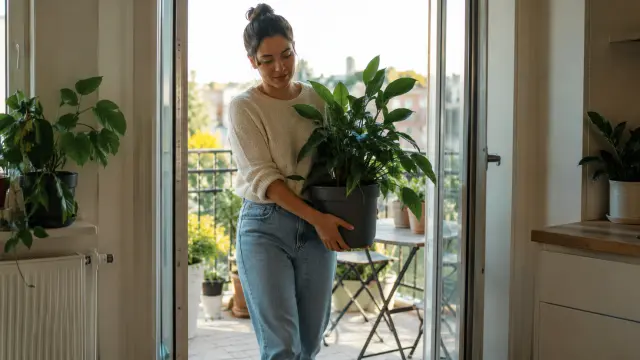
A yucca brought back indoors after summer, moved to another room or just bought is suddenly exposed to lower light. It then drops leaves, often yellowed, for about three weeks while it adjusts. Avoid moving it again during that time. To soften the shock, follow our calendar for bringing your plants indoors before winter.
4. Cold
The spineless yucca dislikes nights below 45 °F (7 °C). Bring it in before nights drop below that threshold, and keep it away from cold windowpanes and drafts.
5. Prolonged underwatering
It's rarer, but soil left dry for a very long time also turns the lower leaves yellow. A yucca can handle a missed watering, not a drought that drags on.
6. Pests
Scale insects, mealybugs and aphids pierce the leaves to suck their sap. Check the undersides of the leaves and their base, where they grow from the trunk. To rule out another cause, learn to recognize an unhealthy plant.
Brown leaf tips, brown spots: where do they come from?
Brown tips are most often caused by dry air, especially in winter, when the heating is on. Too much fertilizer leaves salts in the soil, which also brown the leaf edges: don't fertilize your yucca in winter.
Small oval spots, first yellow then brown, on the oldest leaves point to a fungal leaf disease. It damages the foliage without threatening the plant. Remove badly affected leaves and water at the base without wetting the foliage: the fungus spreads through water droplets.
How do you save an overwatered yucca?
Act as soon as the leaves turn yellow and go soft:
- stop watering and empty the saucer
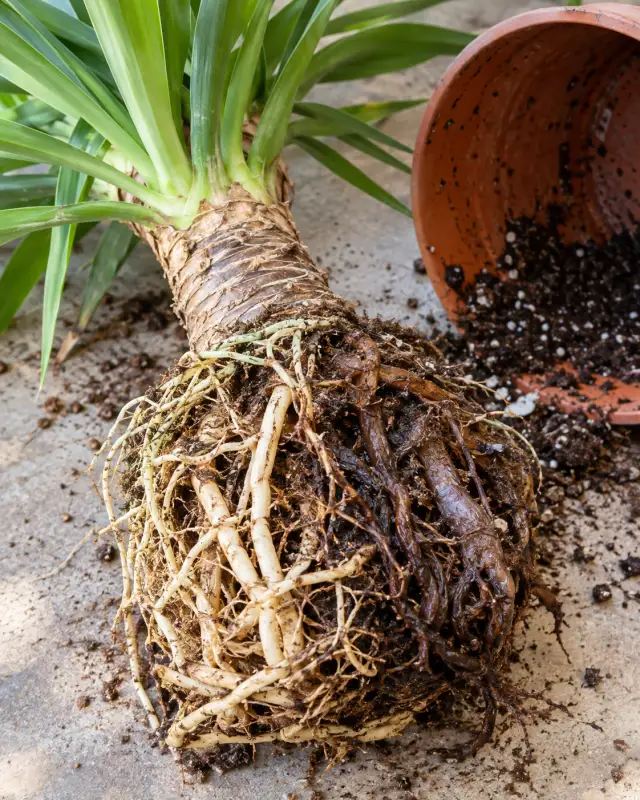
- take the yucca out of its pot and look at its roots: healthy ones are firm; rotten ones are brown and mushy
- cut off the rotten roots and remove the soggy soil
- repot it in a pot with a drainage hole, just big enough for the remaining roots
- use a very fast-draining mix: one part soil to three parts sand or perlite
- wait for the surface of the soil to dry before watering again
What if the trunk is soft?
A soft base means rot has reached the trunk: that part is lost. Yuccas propagate easily, even from a large piece of trunk. Cut the trunk well above the soft area, where it's firm, and replant the top part in a fast-draining mix.
How should you water a yucca, especially in winter?
From April to September, water it generously, then let the surface of the soil dry between waterings. In winter, wait until the top 2 inches (5 cm) of soil are dry, then water thoroughly and empty the saucer. No fixed schedule suits every yucca: it depends on the light, the warmth of the room and the size of the pot. Touch the soil before every watering: it's the key to finding the right watering frequency for each plant.
Frequently asked questions
My yucca is losing its lower leaves: is it serious?
No, if they go now and then, one at a time, turning yellow and then drying: as it grows, a yucca sheds its lower leaves. Several leaves turning yellow all at once and going soft, on the other hand, point to overwatering.
Should you cut yellow leaves off a yucca?
Remove the lower leaves once they're dry, and right away those damaged by fungal spots. Cutting off a yellow leaf doesn't fix the cause: check watering and light first.
Why are my yucca's leaves soft and drooping?
Leaves that turn yellow and go soft all at once point to overwatering. Stop watering, check the roots and repot it in a fast-draining mix if they're rotten.
How often should you water a yucca?
There's no fixed schedule. Water when the surface of the soil is dry from April to September, and when the top 2 inches (5 cm) are dry in winter.
My yucca's trunk is soft: is it lost?
The soft part is. Cut off the top part while it's still firm and propagate it: yuccas propagate easily, even from a large piece of trunk.
Water your yucca at the right time, without drowning it
Arroseo reminds you to water your yucca at the interval you chose, counted from your last watering, and keeps a history of its care. Yellow leaves worrying you? Arroseo+'s health diagnosis points you to the likely cause.
Download the app