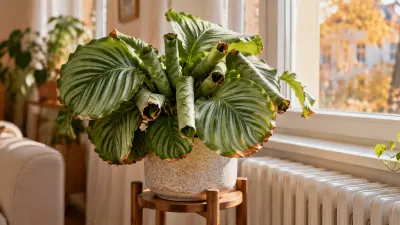
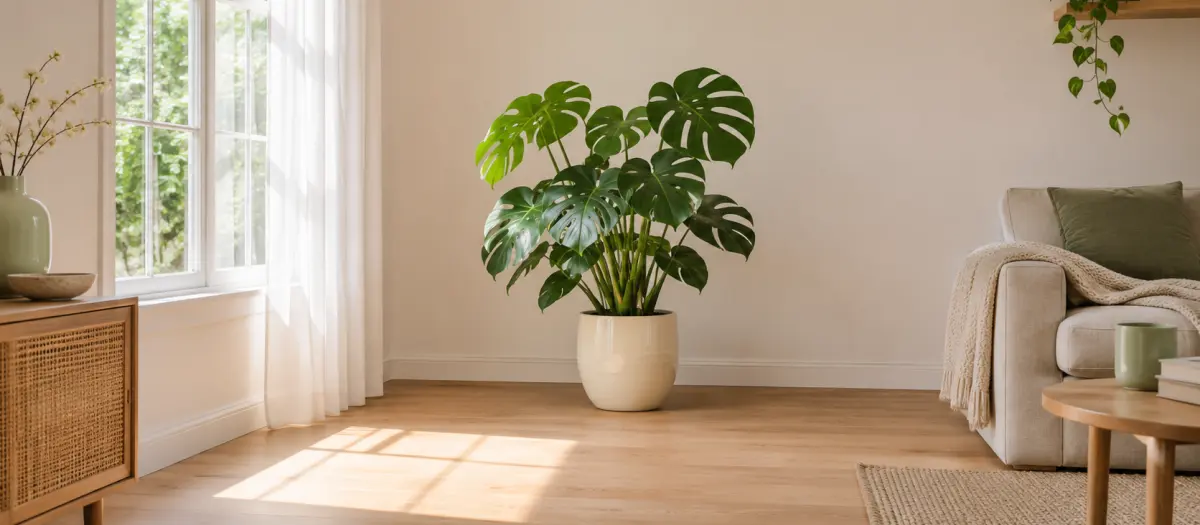
Bright indirect light is light strong enough to cast a sharp shadow, without the sun's rays touching the leaves. At home, you'll find it near a bright window, just out of direct sun. It's the exposure most houseplants prefer, including monstera, ficus, and calathea.
It fades very quickly with distance: more than a few feet from the window, it's often no longer enough for a plant, even in a room that looks bright.
How can you recognize bright indirect light?
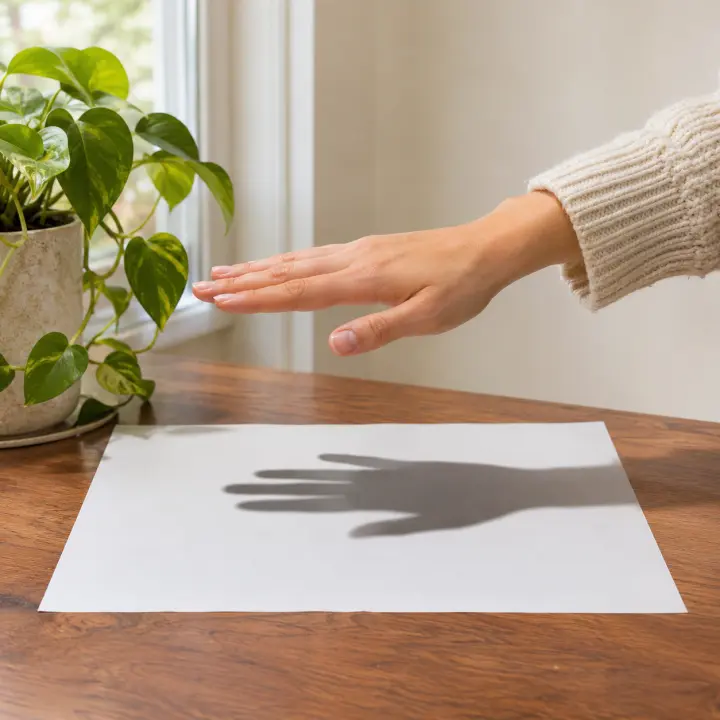
Do the shadow test on a clear day, when the room is at its brightest. Hold your hand about a foot above the spot where you want to put the plant, then look at that spot:
- a patch of sun on the spot: direct sun
- a sharp shadow with well-defined edges: bright indirect light
- a fuzzy shadow: medium light
- a barely visible shadow: low light
Repeat the test in winter: the light in a given spot changes with the season.
💡 Does your plant want sun or indirect light? Take its photo with Arroseo, the free app: its care sheet tells you the exposure that suits it. Identify your plant with Arroseo
How much light is that, in foot-candles?
A light meter measures the light reaching a given spot. In full sun outdoors, it reaches about 10,000 foot-candles (around 100,000 lux); indoors, it's far weaker.
| Level | Measurement | Where to find it |
|---|---|---|
| Low | about 25 to 100 foot-candles (270 to 1,100 lux) | near a north window, especially in winter, or in a room lit by lamps |
| Medium to bright | about 100 to 500 foot-candles (1,100 to 5,400 lux) | near an east or west window |
| High | about 500 to 1,000 foot-candles (5,400 to 10,800 lux) | near a south window, or some west windows |
| Direct sun | more than 1,000 foot-candles (10,800 lux) | a sunroom, a south-facing picture window with no sheer curtain |
Bright indirect light falls in the two middle levels: bright, but with no sun on the leaves.
Where can you find bright indirect light at home?
It all depends on which way the window faces:
- east: plenty of light in the morning; place the plant in front of the window or a little back from it
- west: plenty of light, sometimes too strong on summer afternoons; move the plant back or draw a sheer curtain
- south: the brightest, with direct sun; a sheer curtain turns it into bright indirect light
- north: low to medium light, with no direct sun; save it for plants that get by on little
Distance matters as much as direction. Keep the plant within a few feet of the glass: beyond that, the light drops quickly, and it's also much weaker to the sides of the window than directly in front. A sheer curtain, a window screen, tinted film, a tree outside the window, or dirty glass reduce it further.
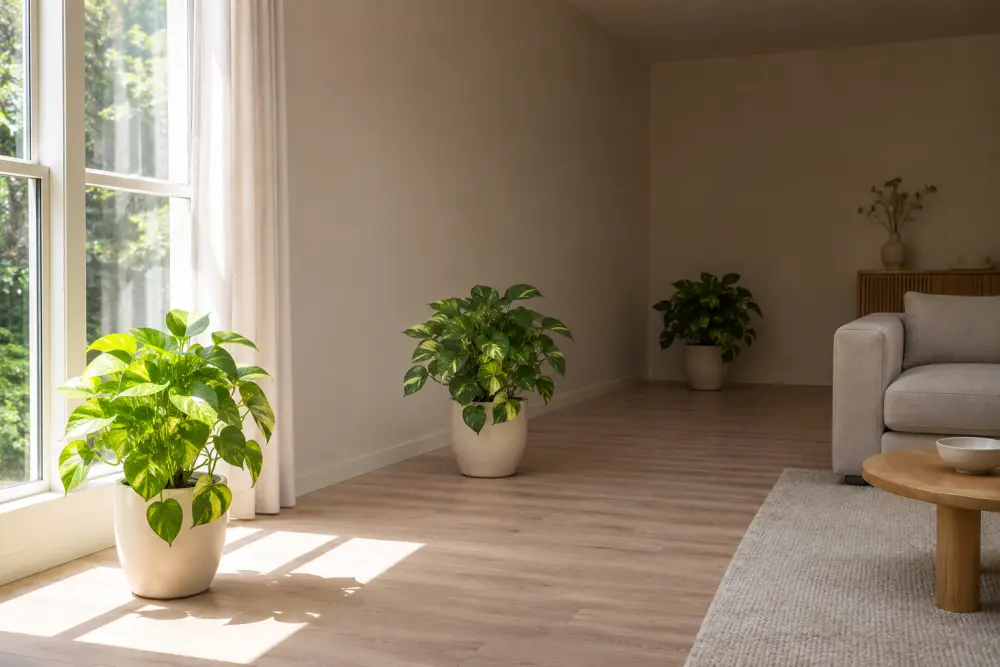
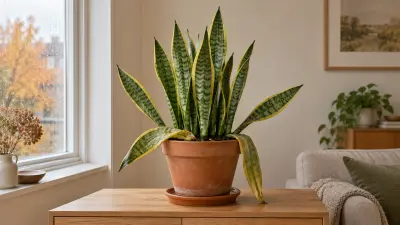
In winter, days get shorter and the light drops: move your plants closer to the window. Even a snake plant, which tolerates shade, ends up with leaves that flop over in a corner that's too dark.
Is my plant getting enough light?
A plant short on light grows long and stretches toward the window, leans to one side, and puts out smaller, paler leaves. It grows little, blooms less, and may drop leaves. Move it closer to the window, and turn the pot from time to time so it grows straight.
On the other hand, leaves that fade, yellow, or brown in front of a south window point to too much direct sun: move the plant back or draw a sheer curtain.
Frequently asked questions
Does a north window give bright indirect light?
Rarely. Right in front of the glass, it gives medium light in spring and summer, and low light in fall and winter. It suits plants that get by on little light.
Is a sheer curtain enough to protect a plant from the sun?
Yes, in front of a south or west window in summer: it softens direct sun. It also reduces the light; in winter, open it.
Should you move your plants in winter?
Yes, move them closer to the window: the light drops and days get shorter. Still, keep them away from cold glass at night and from heaters.
Give each plant the light it needs
Take a photo of your plant: Arroseo recognizes it and shows its care sheet, with the exposure that suits it. Its reminders then prompt you to check the soil, on the schedule you choose.
Download the app